
Material character
Marble
Expressive veins, considered at the scale of the whole piece.
Look closer at the stone.
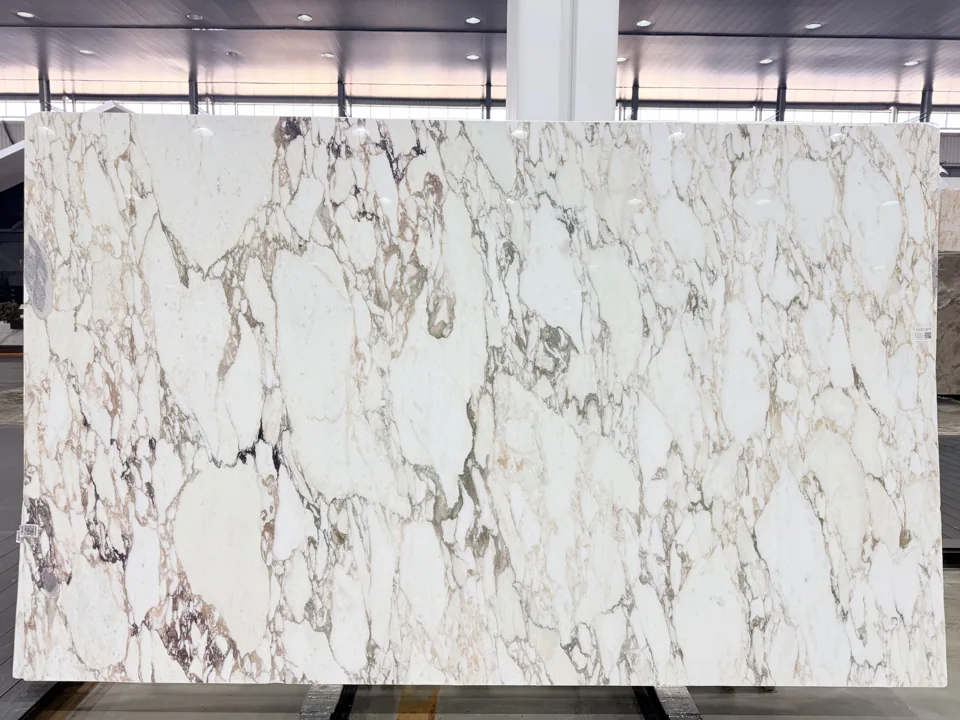
Look beyond the small sample.
A sample helps establish colour and finish; it cannot show the distribution of veins across a table or wall. Ask for a full-slab photograph with a clear identification and show where the parts will be cut. Mark the veins or patches that matter to your design.
- Actual material and slab identification.
- Thickness, visible face and edge treatment.
- Finish, filling and any disclosed surface treatment.
- Full-piece layout and care information.
Texture, edge, application.


Define the visible faces.
Top, edge, return and supporting faces may reveal very different parts of the stone. Agree the direction of the pattern, the location of joints and which faces are most important from the normal viewing position. Use an annotated layout so the drawing and the slab can be read together.
Make maintenance part of the choice.
Discuss how the surface will be used and the amount of change you are comfortable seeing. Request written care guidance for the selected stone, finish and treatment. For daily routines and the difference between a mark and surface damage, use the linked care guide rather than trying a harsh cleaner.
Confirm the actual material.
A trade name and a photograph are useful starting points. Keep the supplied name, source information, slab identification, thickness, finish and disclosed treatments together in the approval record. Do not transfer performance information from a different stone with a similar colour.
Continue the decision.
Full-slab approval checklistCare, stains and etchingAvailable Oct 26Understanding stone trade namesAvailable Oct 28
Next step
Bring a reference. We will help clarify the brief.
Image sources
Image sources
Images illustrate design and material choices. They are not a record of an AxoStone installation.
- Image 1: Original source
- Image 2: Original source
- Image 3: Original source
- Image 4: Original source