Material character
Travertine
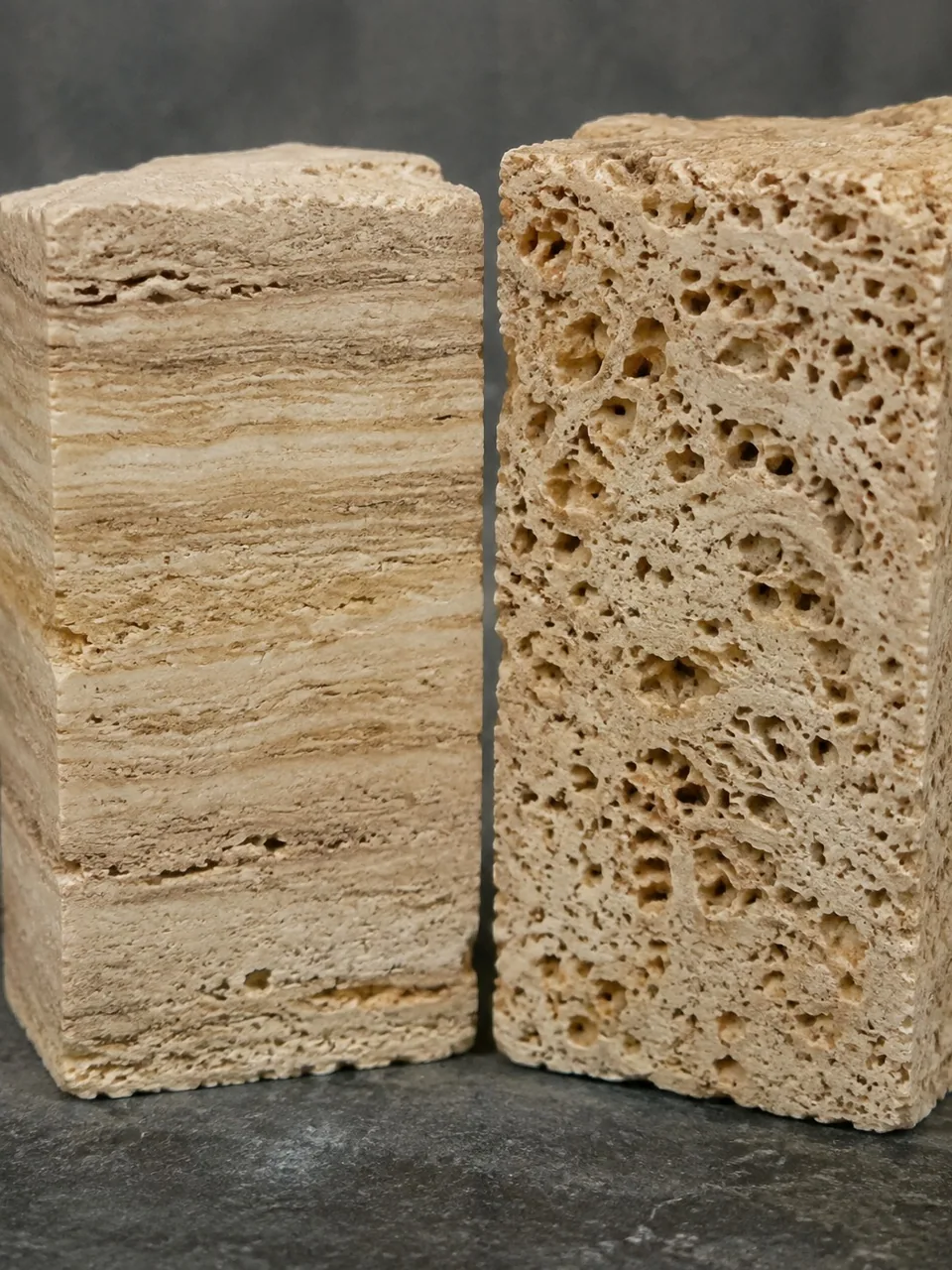
Quiet texture, visible pores and a layered character.
Look closer at the stone.

Start with the surface.
Compare the actual sample in the light of the room. Look at the colour, direction of the layers and the size and distribution of visible openings. Ask which cut, finish and filling treatment the sample represents. A close-up is useful for texture; a full piece is needed to judge the overall pattern.
- Actual material and slab identification.
- Thickness, visible face and edge treatment.
- Finish, filling and any disclosed surface treatment.
- Full-piece layout and care information.
Texture, edge, application.


Agree filling and finish together.
Open pores and filled areas give different visual and tactile results. Ask to see the proposed treatment on a sample, including the edge. Confirm the filler colour, the intended finish and the cleaning method for that combination. A photograph of two surfaces is not evidence of a treatment before-and-after test.
Read the edge and the whole piece.
The direction of the layers changes how a curved edge or return looks. Mark the preferred orientation on the drawing. Where more than one slab is used, review each piece in the layout rather than expecting every surface to match a small sample.
Choose with daily use in mind.
Describe where the piece will be used, what it will hold and the maintenance routine you expect. Ask the supplier for care guidance for the actual stone, finish and treatment. A product-specific sample is more useful than a generic promise about a material family.
Continue the decision.
Full-slab approval checklistCare, stains and etchingAvailable Oct 26Understanding stone trade namesAvailable Oct 28
Next step
Bring a reference. We will help clarify the brief.
Image sources
Image sources
Images illustrate design and material choices. They are not a record of an AxoStone installation.
- Image 1: Original source
- Image 2: Original source
- Image 3: Original source
- Image 4: Original source