Plan the panel map
Set out the full elevation, available slab sizes, joints and vein orientation. Judge the composition around the actual openings rather than selecting a pattern from an uninterrupted slab image.
Objects for the way you live.
Stone furniture and architectural pieces, drawn for your space.
Explore all products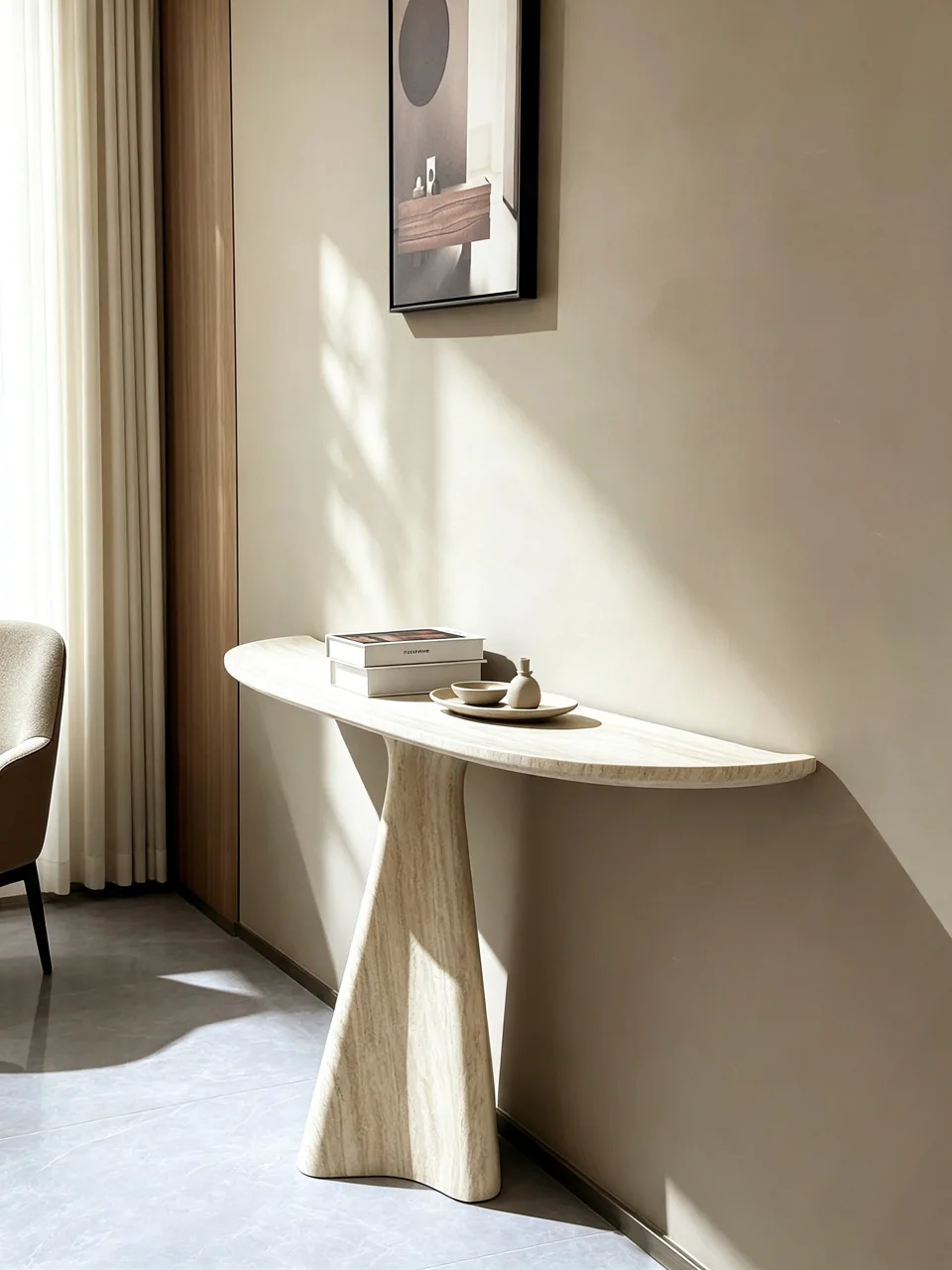
Begin with the stone.
Explore character, finish and the practical demands of your room.
Explore all materials
The detail makes the piece.
From the cut layout to the connection, finish and packing.
Explore our capabilities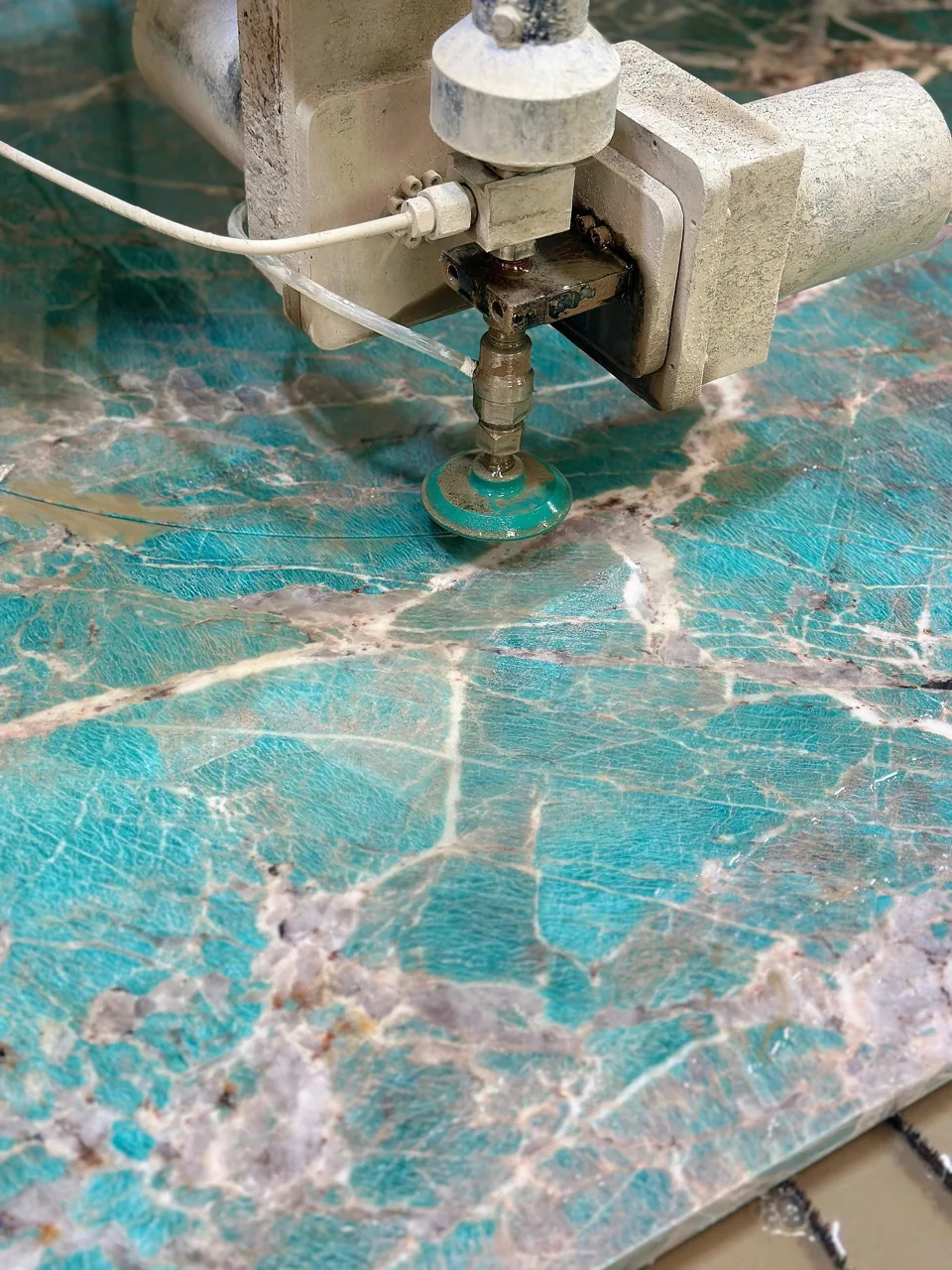
Design study / Architectural surfaces
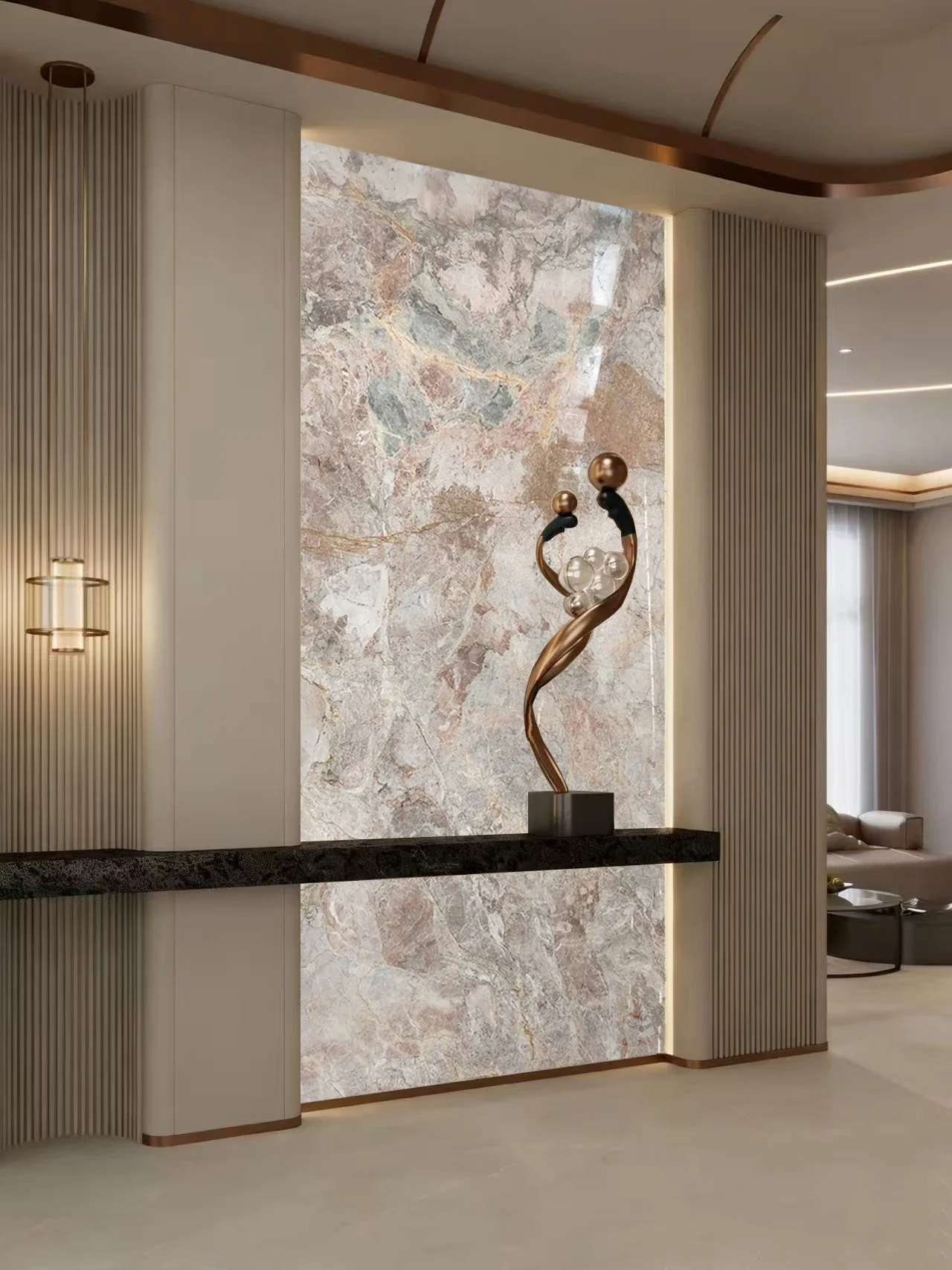
Restrained and coloured wall references show two ways to use stone as part of a complete interior composition.
An editorial analysis of third-party design references. This is not a completed AxoStone client-project record.
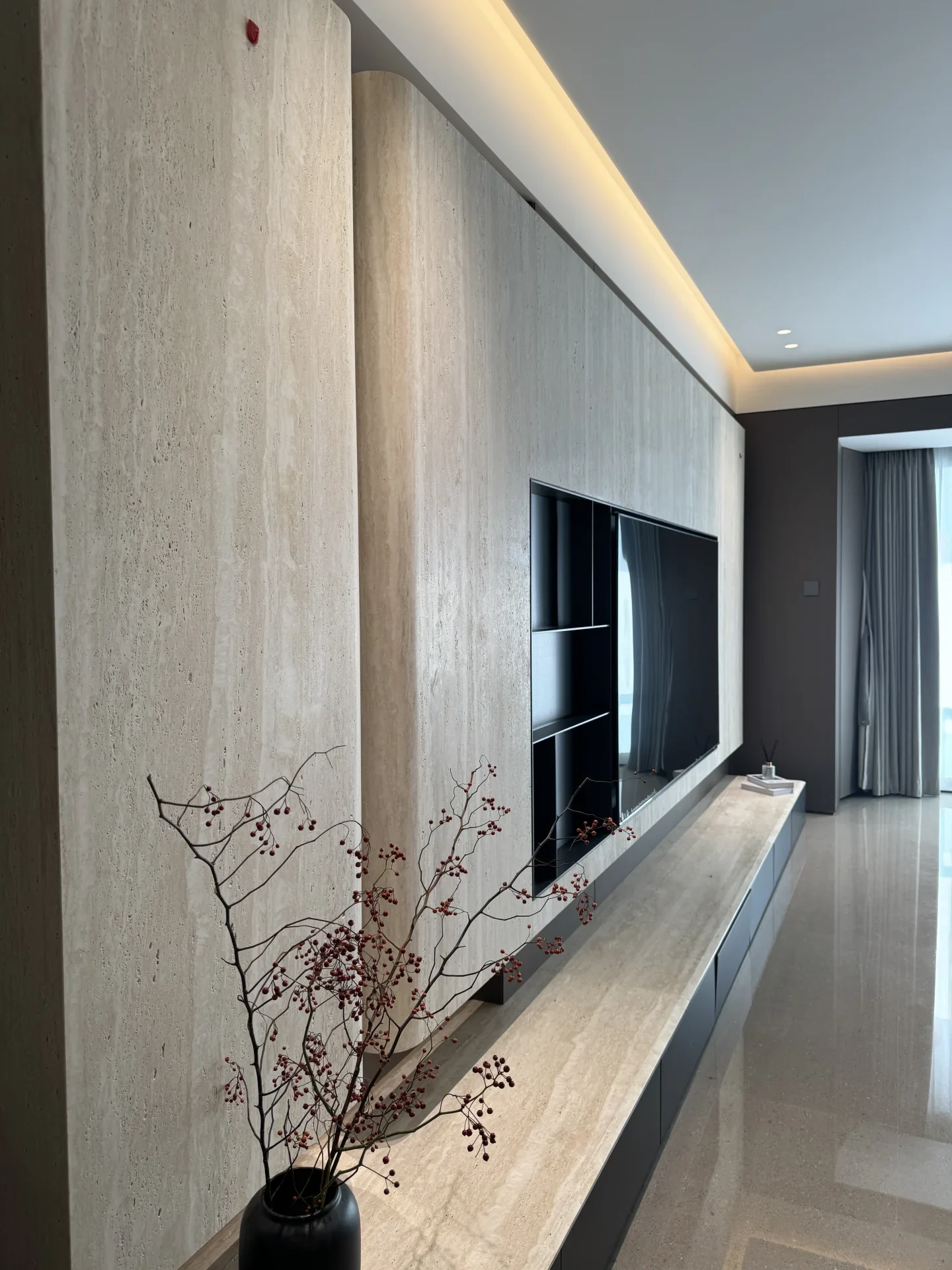
The design context
Use the references to describe the outcome you want; then identify the information that the image cannot establish.
What the references show
The quieter wall reference relies on surface tone and panel proportion; the coloured accent reference makes the material more prominent. In both cases, the wall has to be understood as a full elevation, including its edges, adjacent finishes and any services hidden behind it.
Three decisions to carry forward
These are design-review prompts, not verified construction details for the photographed projects.
Set out the full elevation, available slab sizes, joints and vein orientation. Judge the composition around the actual openings rather than selecting a pattern from an uninterrupted slab image.
External corners, returns and junctions with cabinetry determine how complete the installation looks. Show whether the edge is exposed, mitred or connected to another finish.
Screens, lights, sockets and access panels must be coordinated before cutting. The appropriate fixing system depends on the substrate, panel dimensions and project conditions; decorative stone does not carry unrelated loads by default.
Develop your project
Prepare the finished elevation, substrate information and a complete services plan. Request a numbered panel layout and identify the responsible designer and installer for the wall system.
This study draws design observations from the linked imagery. Dimensions, stone identity, construction and performance have not been independently verified from these photographs. Project-specific specification remains necessary.
Updated