

Material & design fieldnotes
Resin, filling and backing mesh: what to ask about a stone slab
A stone slab can contain disclosed resin treatment, filled areas or backing mesh and still be sold as natural stone. The useful question is what has been applied, where it is present and how it relates to the finished piece. A treatment is not a substitute for a support design or relevant project evidence.
01 / Detail to resolve
Ask for a treatment record, not a yes-or-no label.
Resin treatments and fillers can be used to address surface depressions and natural features. Backing mesh is another distinct element. Identify the actual treatment and the part of the slab it affects instead of treating every intervention as the same process.
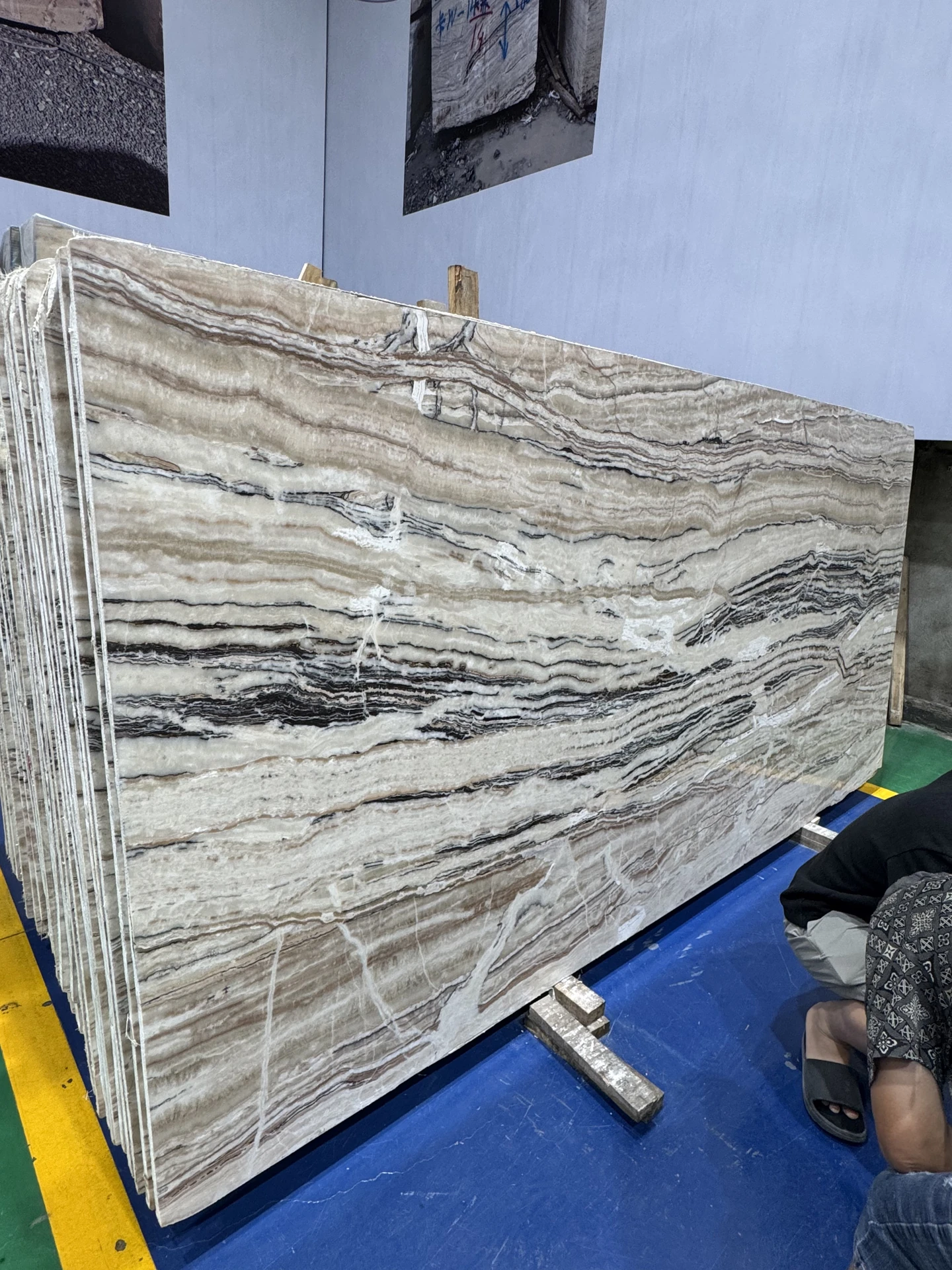
Request face, edge and back photographs connected to the slab number. A polished front image may not show what is visible at the raw edge or underside. The Natural Stone Institute describes resin treatment and mesh backing in its homeowner countertop guidance; the appropriate selection still depends on the particular slab and application.
02 / Detail to resolve
Review the areas that the design will expose.
A tabletop with a thin visible edge presents different inspection points from a deep mitred apron or a carved basin. Mark the exposed face, edge, returns and underside on the proposed drawing. Ask whether the treatment or backing will be visible there.
For a translucent effect, request a representative assembly with the intended lighting and backing. A treatment or backing can be part of that visual result; a face-only photograph is not enough to establish what light will pass through the finished piece.
03 / Detail to resolve
Do not turn a treatment into a load claim.
Backing or an internal repair does not, by itself, tell you the allowable span, overhang or load of a finished table or wall panel. Those questions also involve thickness, geometry, cut-outs, support, fixings and the actual material.
Ask the responsible supplier or designer which evidence is relevant to the proposed assembly. A reassuring word such as reinforced needs a description of the reinforcement and its purpose. It should not replace a drawing or imply that every piece with mesh can be installed in the same way.
04 / Detail to resolve
Keep disclosure attached to approval.
Create a short record linking the slab, disclosed treatment, accepted visible features and cut layout. If a filled area falls near a cut-out or a highly visible edge, identify it before cutting and agree how it will be handled.
A substitution should be reviewed against the same record. Keep care guidance for the treated material and explain any appearance or maintenance conditions to the final user. Disclosure makes comparisons more useful; neither a blanket rejection of all treatment nor a blanket assurance answers the project question.
Compare the choices
What each description tells you.
Surface resin treatment
A treatment associated with the stone surface and its features.
Identify product/process and affected areas.
Local filling or repair
A specific area addressed with an added material.
Locate it on the slab and proposed part.
Backing mesh
A layer on the slab underside.
Show the back and discuss its role in the assembly.
Support or reinforcement design
A project-specific structural relationship.
Request drawings and relevant evidence separately.
Your project checklist
Keep the decisions together.
- Slab ID and full face photographs.
- Raw edge and back views.
- Treatment and filler disclosure.
- Proposed cut layout and exposed surfaces.
- Location of features near openings and edges.
- Project support details and care guidance.
Questions, answered
Before you decide.
Does backing mesh mean a slab is fake stone?
No. Mesh is a backing element, while the material identity is a separate question. Request identification and treatment disclosure for the actual supplied slab.
Does resin make every slab stain-proof?
No. A treatment name alone does not establish stain resistance or suitability for a use. Obtain the actual product and care information and avoid assuming universal performance.
Can I specify a large unsupported span because the slab has mesh?
Do not infer capacity from mesh alone. The material, dimensions, cut-outs, supports and fixing design need appropriate project-specific assessment.
Should treatment disclosure be included in slab approval?
Yes. Link it to the slab reference and cut layout, especially where filled areas, backing or repairs may affect a visible face or a critical detail.
Continue the project.
Sources & image context.
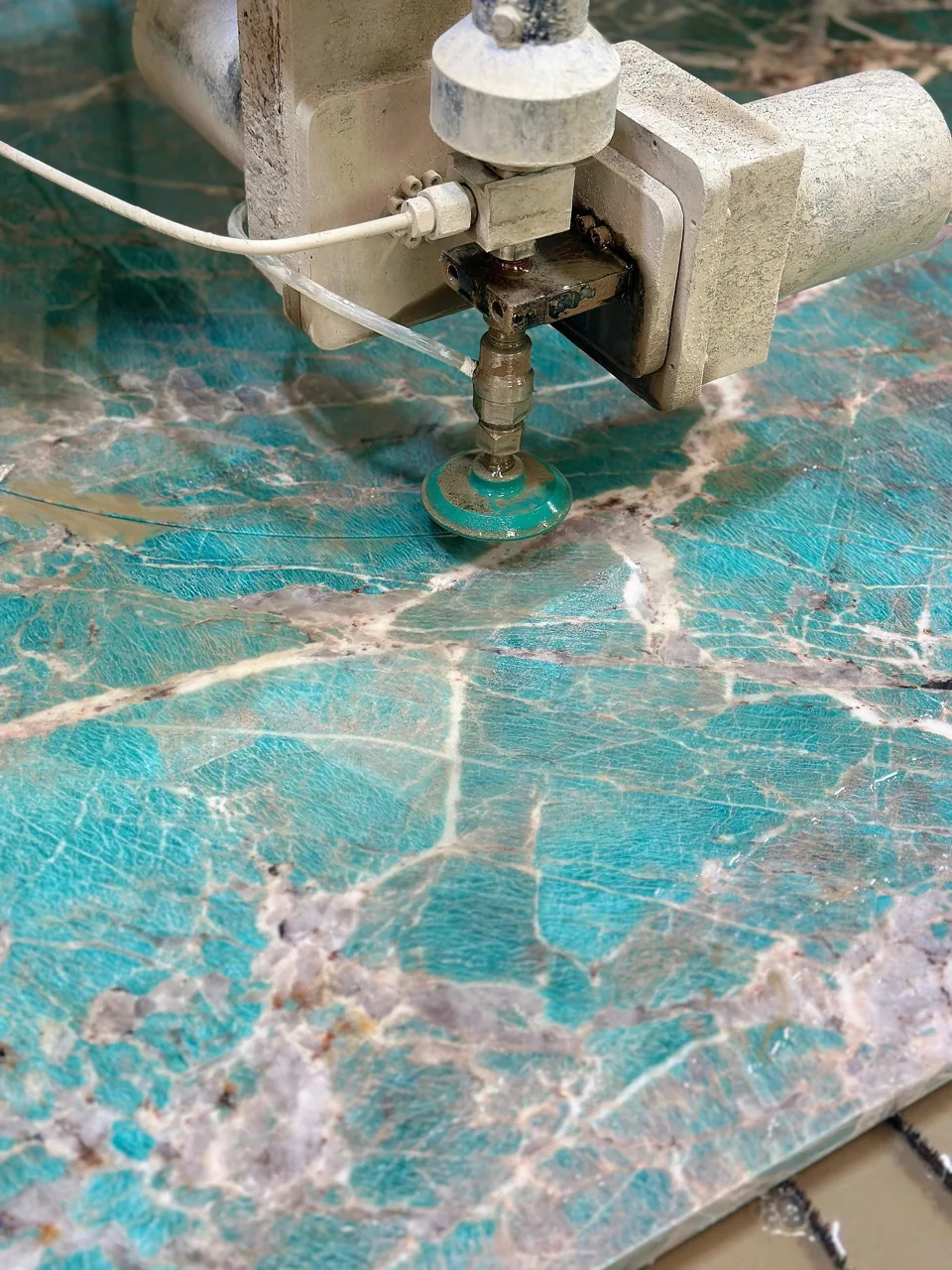
A face view does not disclose resin, filling or backing; review both sides and the treatment record. Collected references are third-party examples, not AxoStone customer or production records. The guidance is an original editorial synthesis; a reference post does not validate technical performance claims.
View the source notes
General stone-care and treatment context: Natural Stone Institute — care & cleaning; sealing stone; consumer countertop guide. These general references do not replace the current instructions for the selected stone, treatment, fitting or assembly.