
Material & design fieldnotes
Vein-cut or cross-cut travertine: choose the pattern before the layout
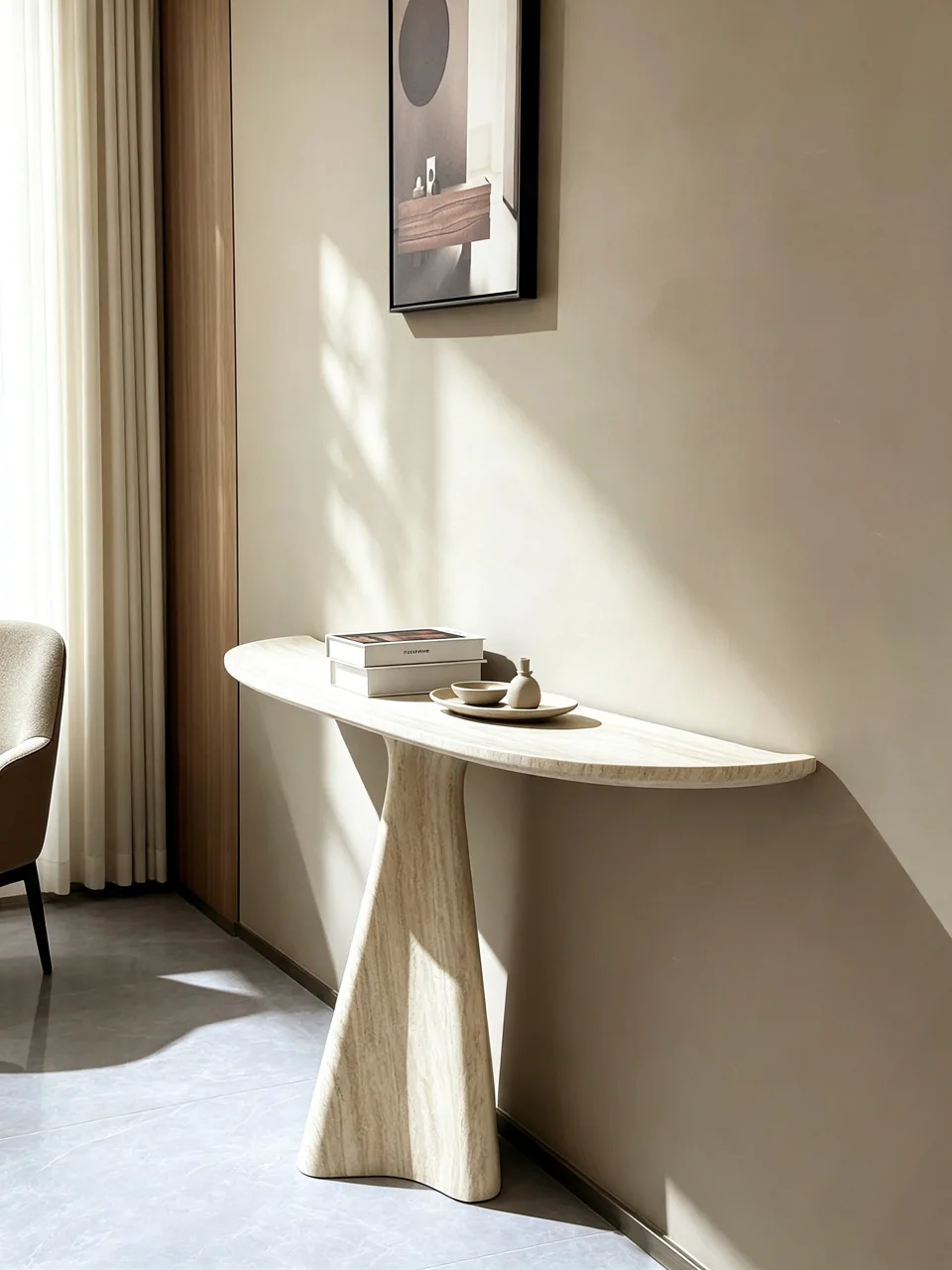
Vein-cut travertine is chosen for a directional, banded appearance; cross-cut travertine usually reads as a more clouded or cellular pattern. Cut direction is a visual specification. Filling, surface finish, panel layout and support remain separate decisions.

01 / Detail to resolve
Read the pattern at the scale of the piece.
A close-up may show attractive pores without revealing the direction that will dominate a full wall or tabletop. Ask to see the complete slab or proposed pieces, with their intended orientation marked. Linear banding can emphasise length; rotating it can change the apparent proportions of the same surface.
A collected slab-selection account describes rejecting a visually preferred travertine because its dimensions did not suit the project. That is a useful procurement lesson: the desired pattern must exist inside a usable cutting envelope. The source is a buyer reference, not an AxoStone order record.
02 / Detail to resolve
Choose direction, filling and finish independently.
Vein-cut does not mean unfilled, and cross-cut does not mean honed. Record the cut, whether pores are filled, the filling material and the final finish as separate fields. A sample that shows only the colour leaves several important choices unresolved.
Look at an exposed edge as well as the top. Pores, filling and veins can read differently at a return or rounded profile. If the design includes grooves, ask for a representative finished detail rather than assuming the flat sample describes every visible surface.
03 / Detail to resolve
Make the joints part of the composition.
For a wall, draw the complete elevation with panel numbers, joints and corners. Decide whether bands continue across panels, alternate direction or deliberately break at a return. A series of attractive individual pieces can produce a confused wall if orientation is left unspecified.
For furniture, put the top and visible base pieces on the same cut layout. Continuous-looking veining across separate components may require particular slab positions and extra material. Ask which parts are intended to match and which will be coordinated rather than continuous.
04 / Detail to resolve
Approve a repeatable selection.
Keep the slab reference, cutting direction and finish sample beside the numbered layout. If the material changes, repeat that review; the same commercial name can describe a broad appearance range. For multiple pieces, agree how much variation the collection should retain.
Review the sample in the intended light. Raking light can emphasise texture, while a frontal image can flatten it. Neither a filter nor a warmer light source changes what has actually been specified. Keep stone-care guidance with the final selection.
Compare the choices
What each description tells you.
Vein-cut direction
Linear movement; a more directional composition.
Mark orientation on every visible part.
Cross-cut direction
Clouded or cellular movement; less emphasis on one line.
Review the whole piece, not only a small sample.
Filled pores
A more continuous working surface.
Identify filler and exposed-edge treatment.
Open pores
A more pronounced natural texture.
Consider cleaning access and the intended use.
Your project checklist
Keep the decisions together.
- Full slab reference and usable dimensions.
- Cut description and marked orientation.
- Filled or unfilled, with treatment disclosed.
- Actual finish sample, including an edge.
- Numbered pieces and joint map.
- Agreement on variation and substitutions.
Questions, answered
Before you decide.
Can the same travertine look different when rotated?
Yes. Directional bands can change how a tabletop or wall is perceived. Review the actual parts in their intended orientation before approving the layout.
Is vein-cut travertine automatically suitable for a wet area?
No. Cut direction describes appearance. The actual material, filling, finish, waterproofing and installed assembly must suit the proposed wet-area use.
Does cross-cut eliminate natural pores?
No. Pores and their treatment remain part of the material selection. Confirm filling separately from the description of the cut.
Can every panel be made to match perfectly?
Natural variation and slab availability set the limits. Define the intended relationship and approve a numbered layout instead of relying on a general promise of matching.
Continue the project.
Sources & image context.
The image illustrates visual orientation; it is not a specification for an exterior fixing system. Collected references are third-party examples, not AxoStone customer or production records. The guidance is an original editorial synthesis; a reference post does not validate technical performance claims.
View the source notes
General stone-care and treatment context: Natural Stone Institute — care & cleaning; sealing stone; consumer countertop guide. These general references do not replace the current instructions for the selected stone, treatment, fitting or assembly.