

Describe the change before treating it.
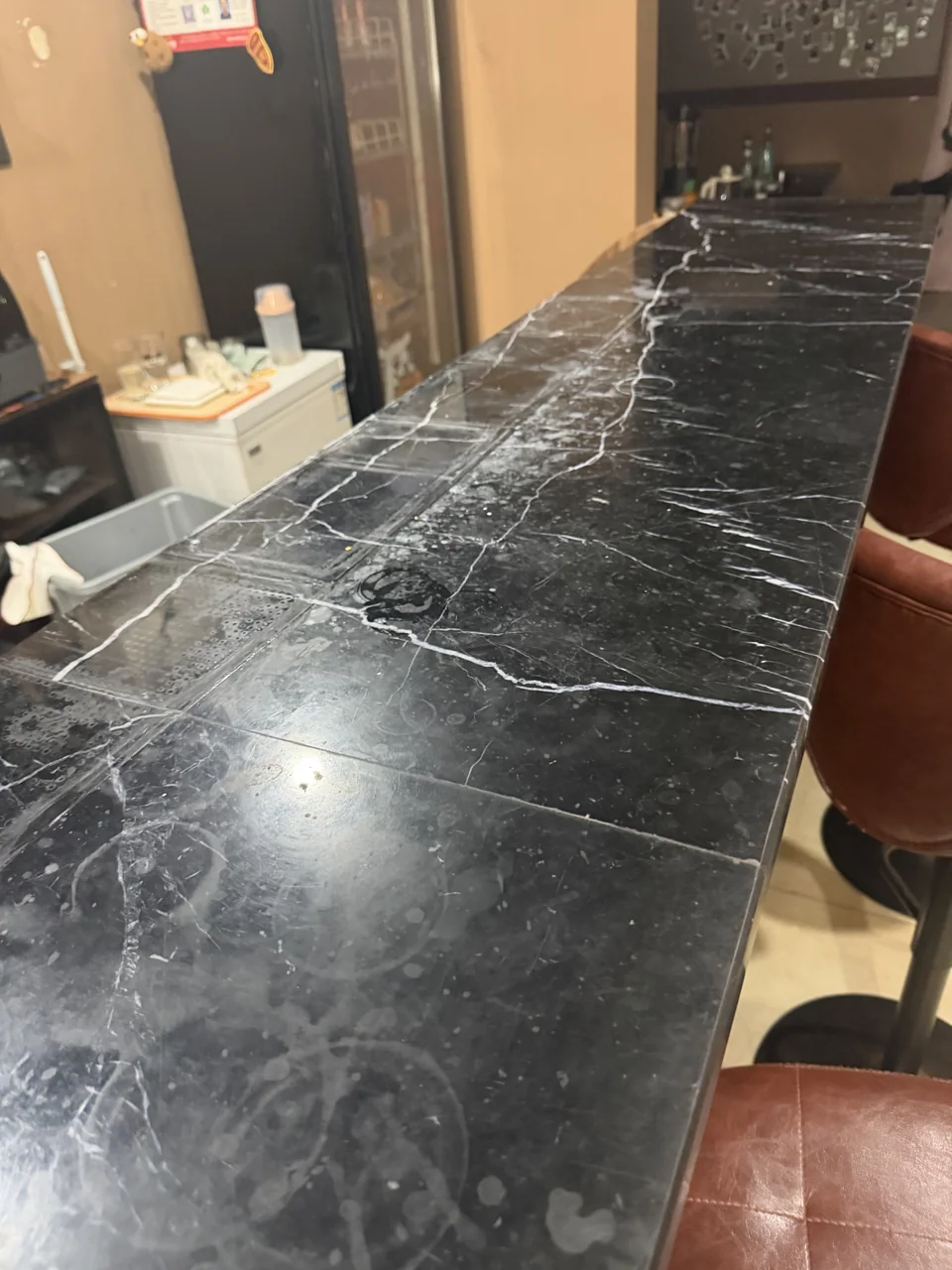
Record when the mark appeared, its location and what may have contacted the surface. Photograph the area in ordinary and reflected light. Keep the stone name, finish and treatment information if available. A dark patch, pale ring or loss of reflection may require different advice.
Do not stack several cleaning products in an attempt to remove an unidentified mark. Tell the supplier or restoration professional what has already been used so the next step can be assessed.
Keep care claims separate.
The Natural Stone Institute explains that acidic products can etch calcium-carbonate-based stone, while impregnating treatments improve resistance to staining without making a surface stain-proof. Sealing is not a remedy for every kind of mark.
Use the care instructions for the actual stone and treatment. For an uncertain or persistent mark, seek a diagnosis rather than assuming it needs stronger cleaning, another coating or a polishing product.
Build a simple maintenance record.
Keep the product names and dates of any applied treatment. Note the recommended cleaning method and the contact for restoration advice. This is especially useful when a property changes hands or several teams clean a commercial space.
For a repair proposal, ask what will change in colour, texture or gloss and whether a sample area can be reviewed. Agree the expected result and the limits before work begins.
Your checklist
- 01
Material, finish and previous treatment.
- 02
When the mark appeared and likely exposure.
- 03
Photographs in two lighting directions.
- 04
Products already used.
- 05
Supplier or qualified restoration advice.
- 06
Agreed result before any repair.
Keep the agreed information with the dated project drawing.
Questions before the next step
Will sealer remove an existing dull ring?
First identify the cause. A treatment intended to reduce staining does not necessarily correct surface damage or restore a finish.
Should I try a stronger cleaner?
Follow the specific care guidance and seek advice for an unidentified mark. Avoid repeated experiments that make diagnosis harder.
References
Image sources
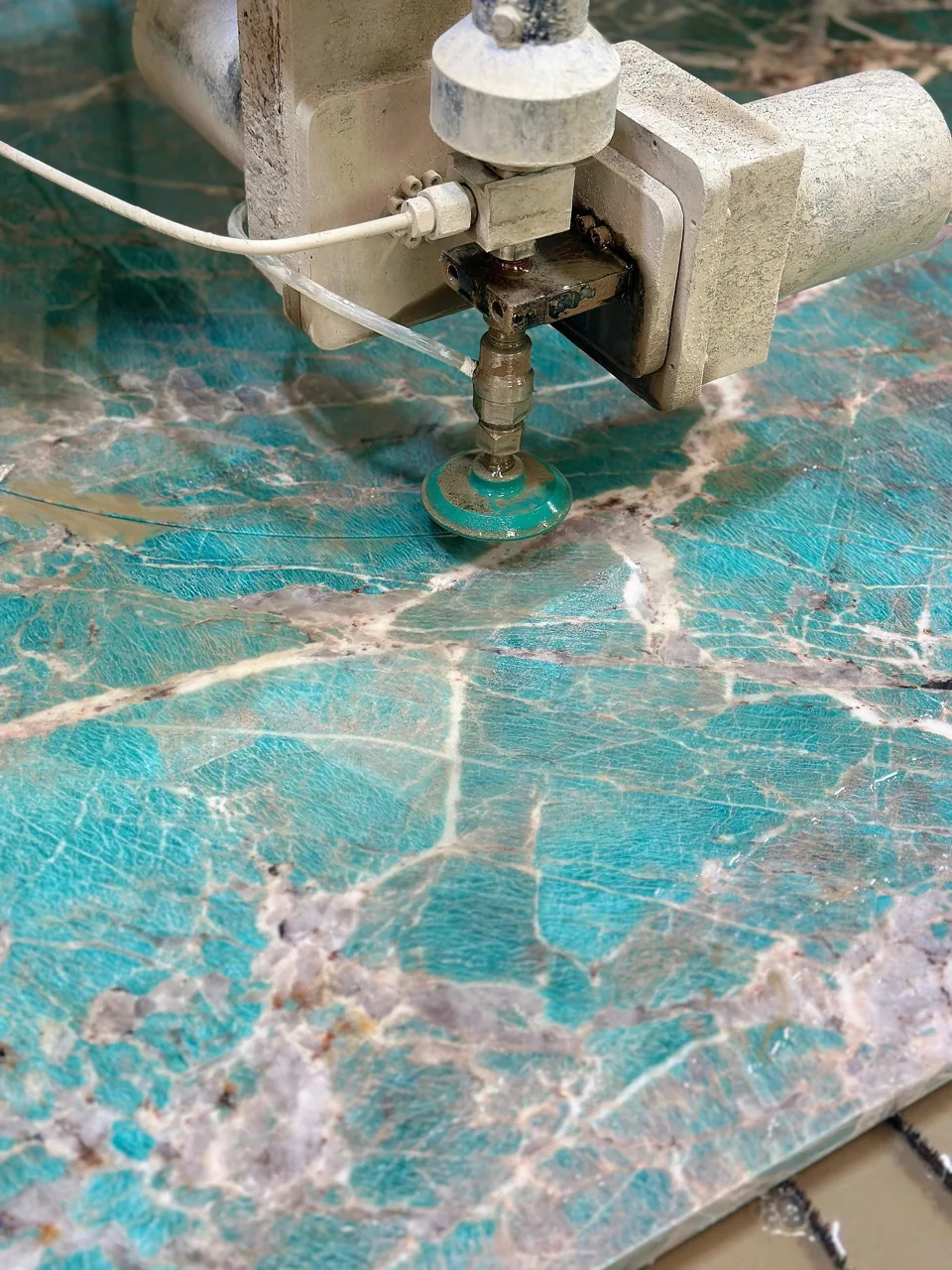
Images illustrate design and material choices. They are not a record of an AxoStone installation.
- Image 1: Original source