
Material & design fieldnotes
Stone edge profiles: choose the section, corners and finish together
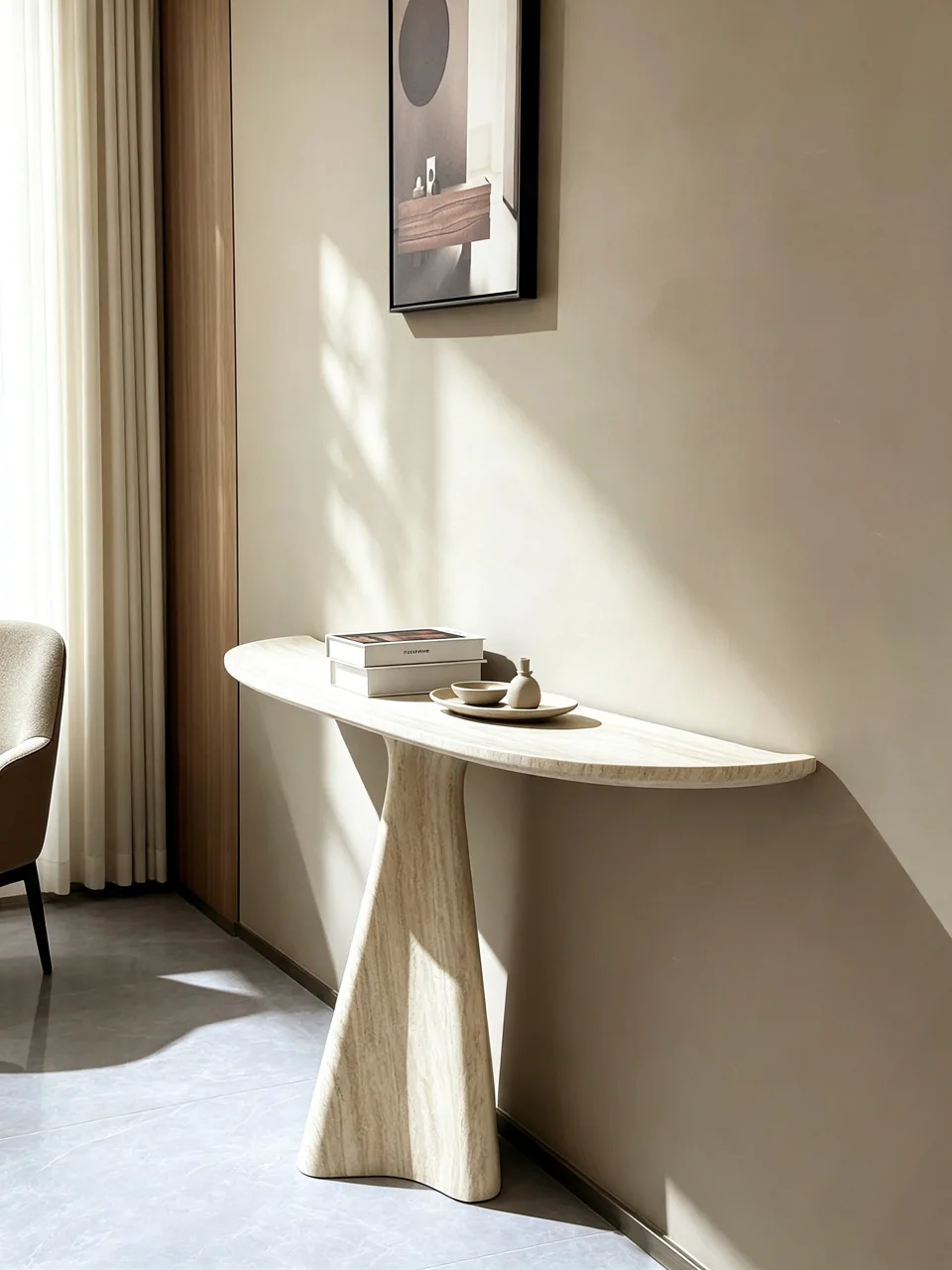
An edge profile is the section of an exposed stone edge, not the outline of the whole tabletop. An oval top can have an eased, rounded, bevelled or built-up edge. Draw the outline, section, corner transitions and finish as separate but coordinated decisions.
01 / Detail to resolve
Distinguish the plan from the profile.
Round, oval and racetrack describe the outline seen from above. Bullnose, bevel and an eased edge describe a section through the edge. A reference can communicate one clearly while leaving the other uncertain. Ask for both views on the approval drawing.
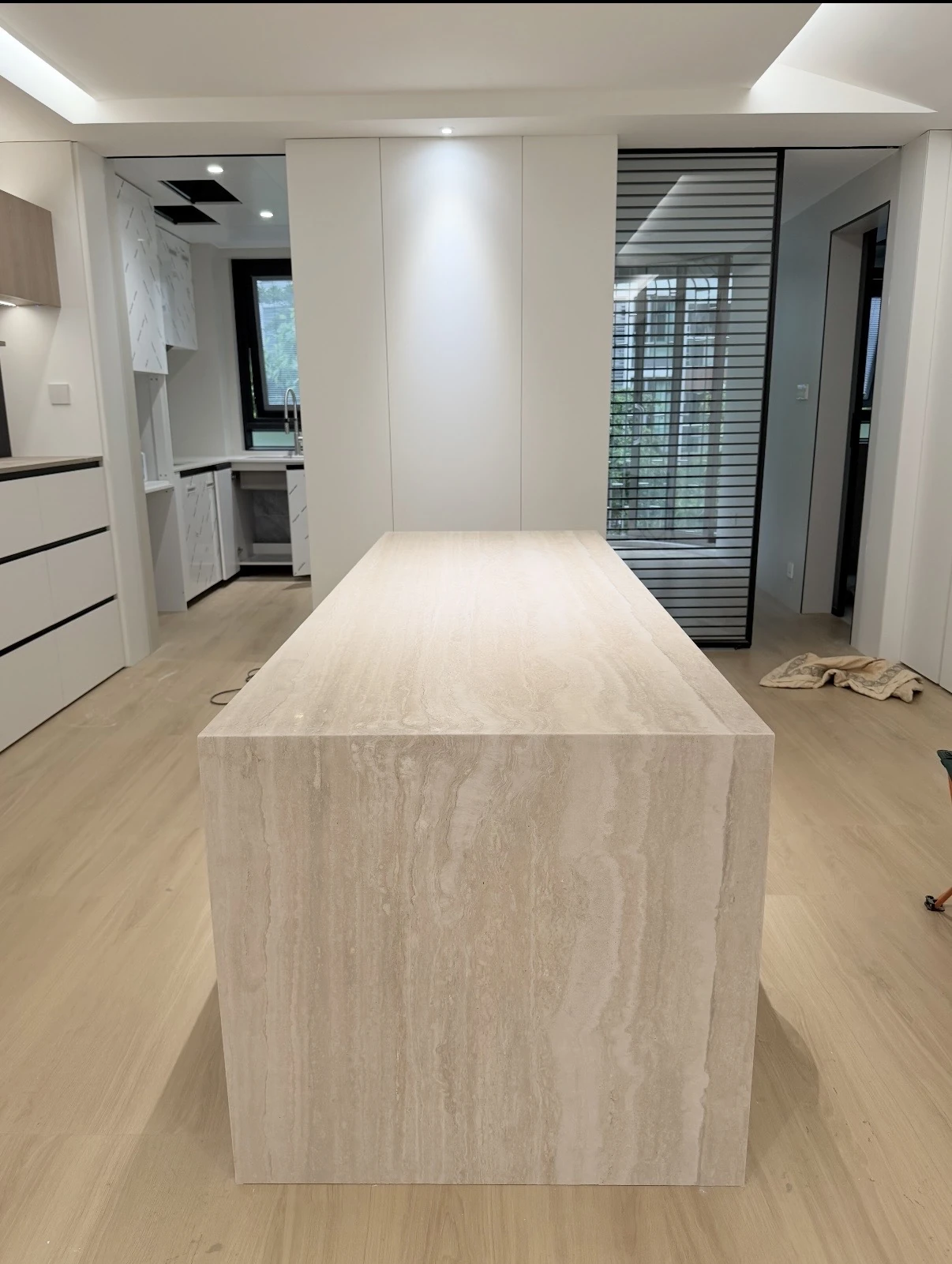
Mark which edges are exposed and where an edge meets a wall, another material or a mitred return. A profile that works along a straight front may need a deliberate transition at a curved corner or a cut-out.
02 / Detail to resolve
Compare profiles at actual size.
A small softened edge can preserve a precise silhouette; a fuller round can make the piece feel softer; a bevel introduces another plane; a moulded profile adds a more classical rhythm. Their visual effect depends on the material, thickness and finish.
Use a sample with the proposed dimensions rather than naming a profile alone. Suppliers can interpret profile names differently. A labelled cross-section with dimensions and a finished sample is a clearer instruction than a screenshot or a catalogue term.
03 / Detail to resolve
Review material character at the edge.
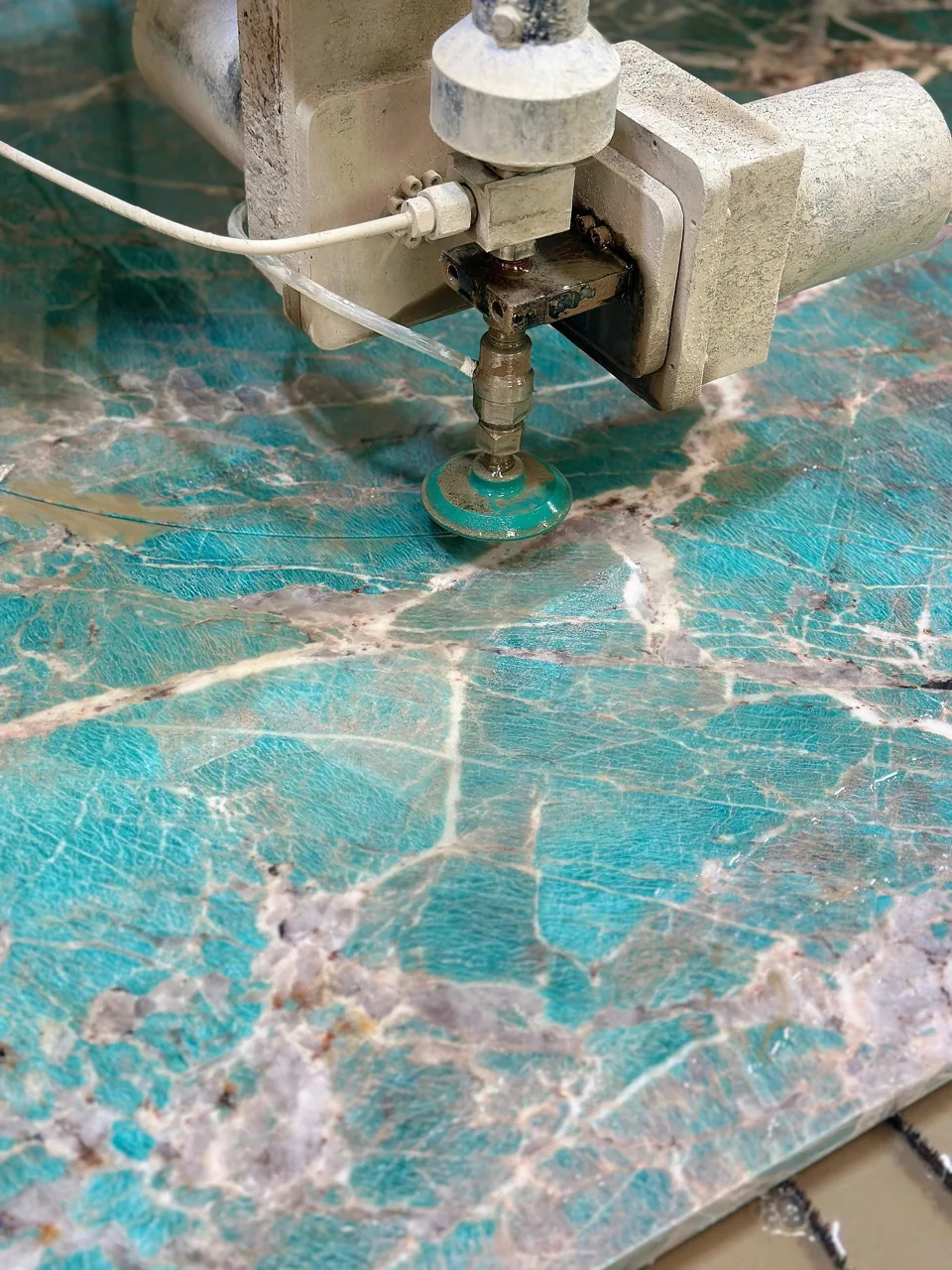
Veining, pores, crystals and filling can become more noticeable on an exposed profile. A material selected from a face-only sample may look different after a deep curve or return is formed. Ask how the edge will be finished and whether any treatment remains visible.
A more complex profile also creates more surfaces to inspect and clean. Consider the location of drinks, hands and adjacent upholstery, and how accessible the detail will be in normal use. A visual preference should be tested against the piece's role in the room.
04 / Detail to resolve
Keep geometry and finishing in one approval.
Show the top section, underside, corner radius and relevant junctions together. Confirm that the desired profile can be developed in the selected material and construction. The fabricator needs the final drawing and sample relationship before cutting or profiling begins.
At inspection, compare consistency around the perimeter and at the transition points. Look for the agreed appearance and surface finish rather than expecting the profile name alone to define every tolerance or fabrication detail.
Compare the choices
What each description tells you.
Eased edge
A restrained edge with a softened arris.
Agree the amount of softening and underside detail.
Rounded or bullnose
A fuller curved section.
Review actual thickness and corner transitions.
Bevelled edge
A chamfer creates a distinct angled plane.
Dimension the bevel and its relationship to the face.
Moulded or built-up edge
A layered, classical or deeper-looking section.
Request a complete section and visible joint detail.
Your project checklist
Keep the decisions together.
- Top outline and edge section.
- Actual slab thickness.
- Profile dimensions, not only a name.
- Corner and cut-out transitions.
- Visible underside and return details.
- Finished sample and inspection reference.
Questions, answered
Before you decide.
Can an oval top have a square-looking edge?
Yes. The outline and edge section are separate choices. Specify the top shape in plan and the exposed profile in section.
Is an eased edge identical for every supplier?
No. Profile names can be interpreted differently. Use a dimensioned section and sample to make the intended result clear.
Will a deep rounded edge look the same in every stone?
No. Pores, veining, filling and the actual slab section can affect the result. Review a representative finished edge in the selected material.
Should the edge finish match the top?
Define the intended relationship explicitly. A matching finish is common, but a deliberate contrast should be shown and approved rather than occurring by assumption.
Continue the project.
Sources & image context.
Confirm the edge section and treatment on a sample; the photograph is not a fabrication drawing. Collected references are third-party examples, not AxoStone customer or production records. The guidance is an original editorial synthesis; a reference post does not validate technical performance claims.
View the source notes
General stone-care and treatment context: Natural Stone Institute — care & cleaning; sealing stone; consumer countertop guide. These general references do not replace the current instructions for the selected stone, treatment, fitting or assembly.