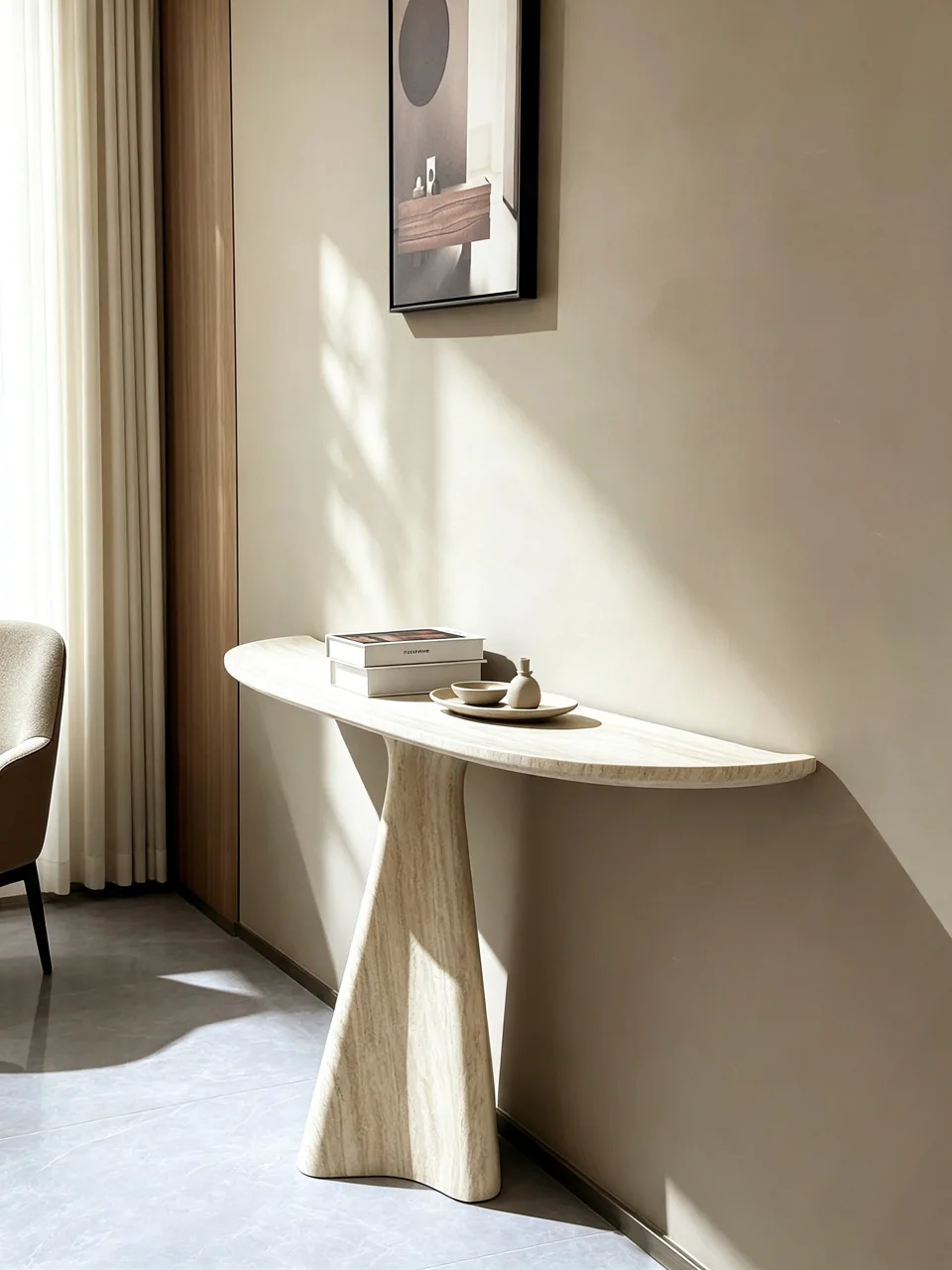
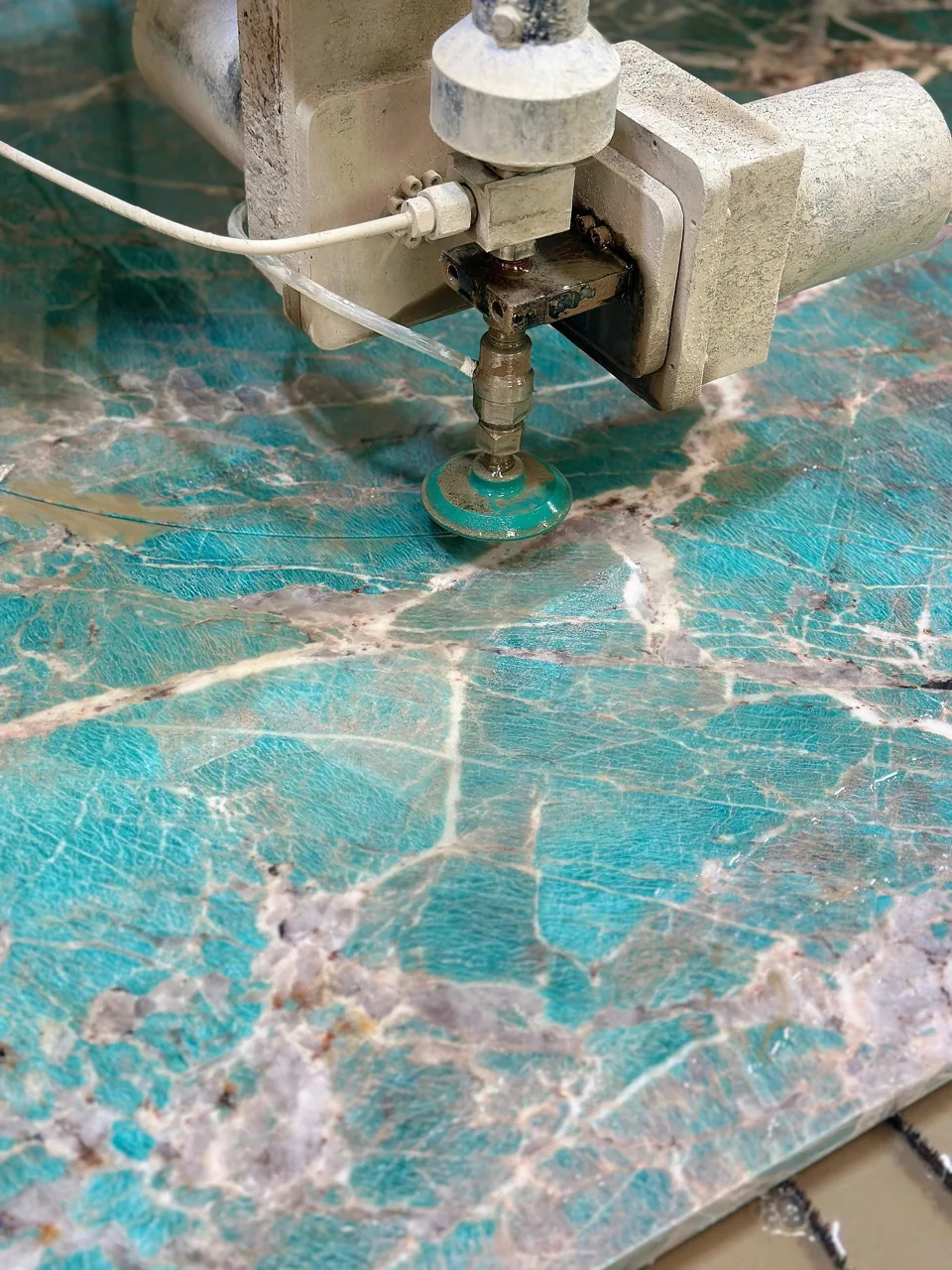
Stone colour & pattern library
Light, dark, green, pink and expressive surfaces: compare the whole palette.
Read the room and the detail.


Compare visual character before names.
Look at the background colour, contrast, vein density and direction. A familiar colour name can cover quite different appearances. Use the actual sample and a full-slab or whole-piece view to understand what will be visible.
Place the stone beside its neighbours.
Review paint, timber, metal, fabric and stone together under the intended lighting. Decide whether the stone leads the room or supports a quieter composition. Keep the finish as part of the colour decision because reflected light changes the impression.
Treat textures as design references.
A texture image is useful for a mood board. It does not establish the actual slab, origin, stock or suitability. Keep that distinction clear when a colour direction becomes a request for quotation.
Record the selected relationship.
Save the material references and the features you want to retain. Mark whether a substitution should match closely, coordinate or deliberately contrast. Review any proposed change against the whole palette and the specific use.
Turn the reference into a decision.
- Name the feature you want to retain.
- Add room dimensions and intended use.
- Review the actual material and finish.
- Resolve support, fittings and adjoining surfaces.
- Keep the final drawing and scope together.
Keep exploring.
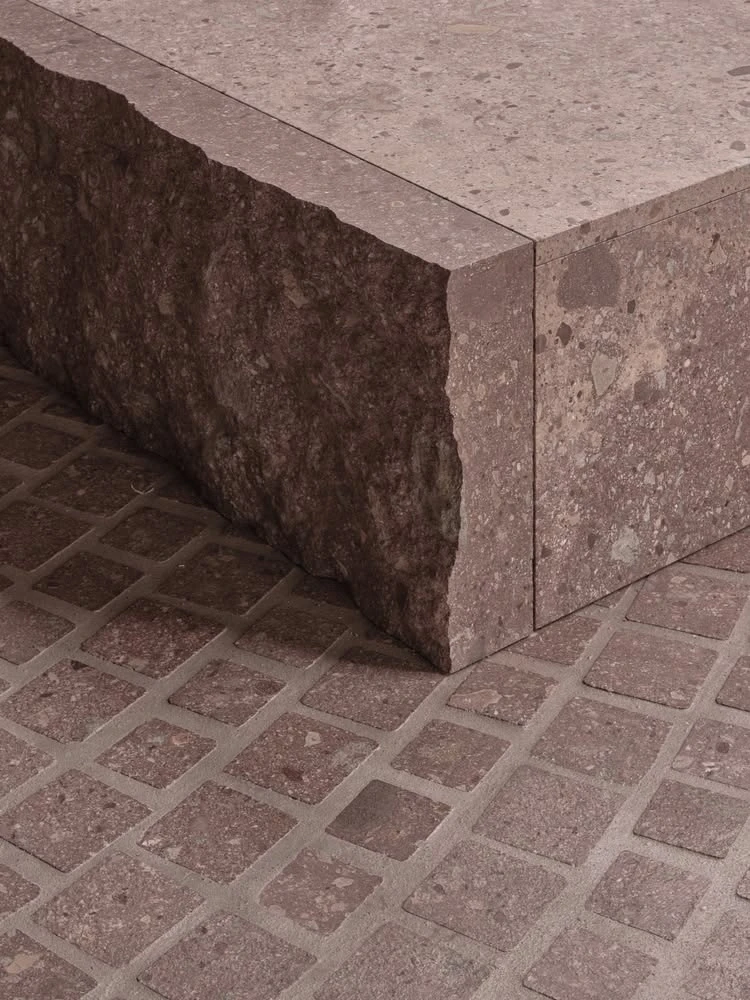
Solid stone or mitred build-up: read the section behind the silhouette
A thick-looking stone top or base may be solid, carved, assembled from slabs or built around another support.
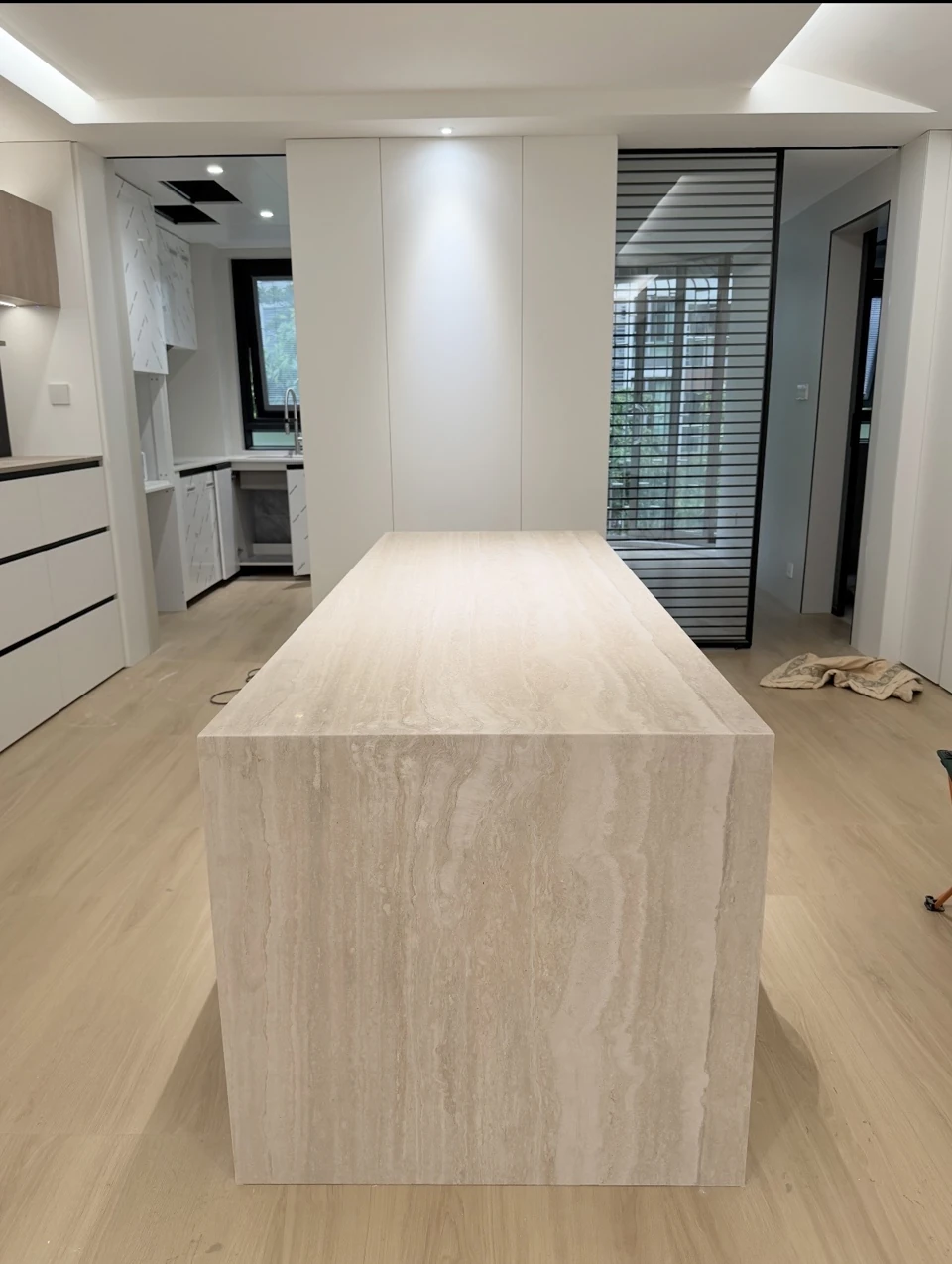
Stone edge profiles: choose the section, corners and finish together
An edge profile is the section of an exposed stone edge, not the outline of the whole tabletop.
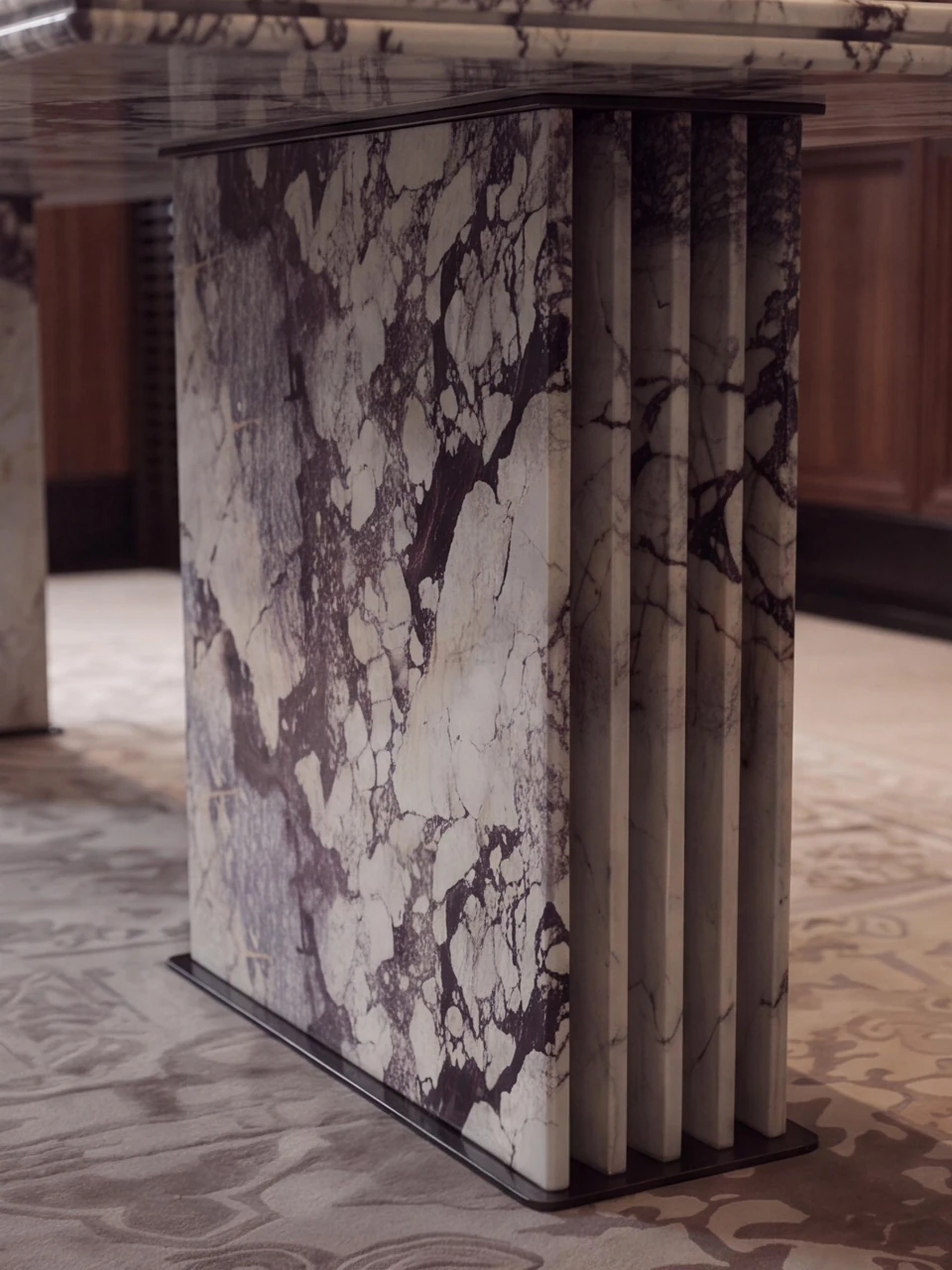
Fluted stone: groove geometry, light and cleaning access
Fluted and reeded stone effects can be carved into a surface or assembled from separate components.
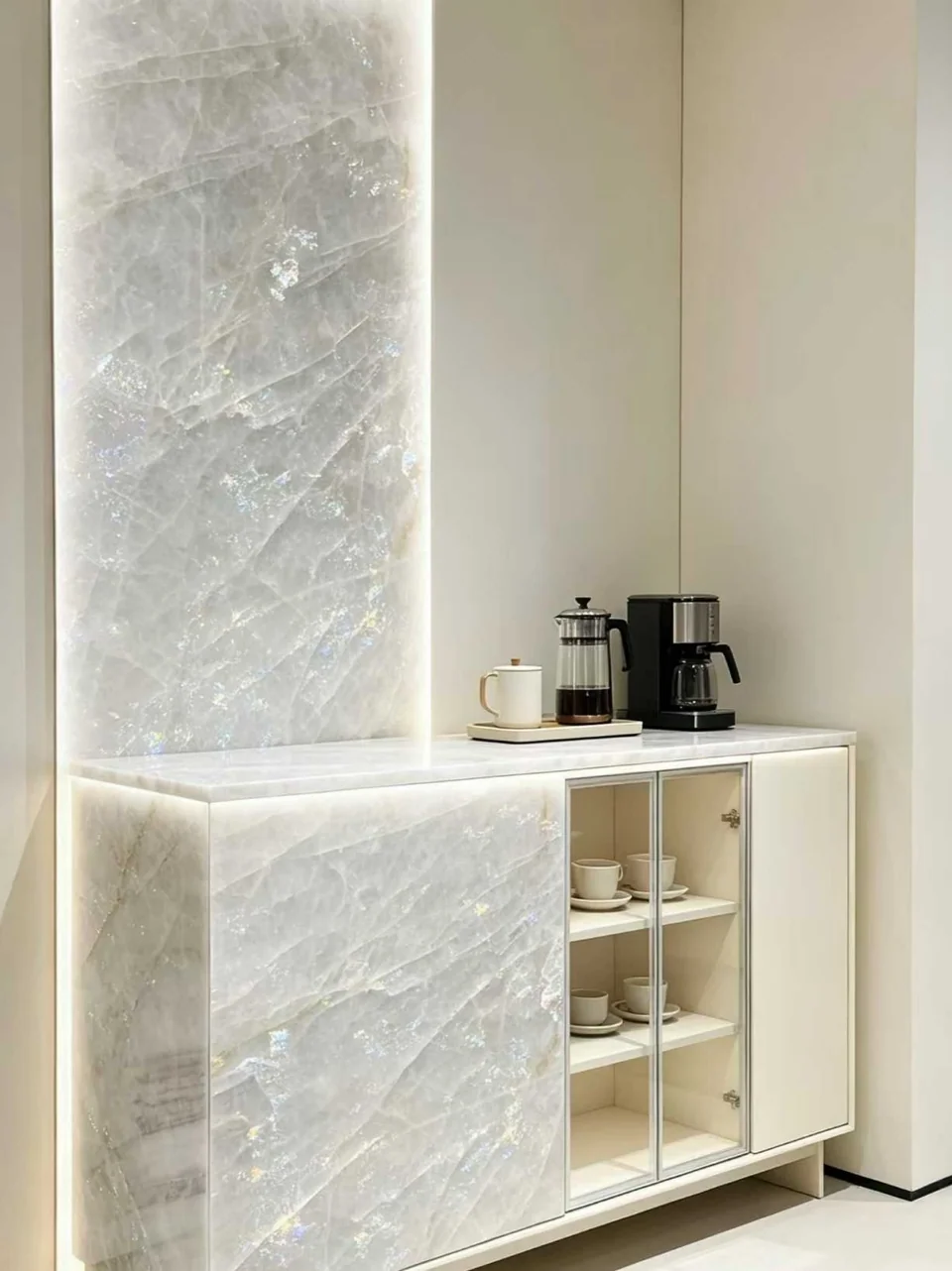
Backlit stone: what to decide before ordering
Test the actual material with the intended light source and assembly. A halo around a panel and light transmitted through stone are different effects.
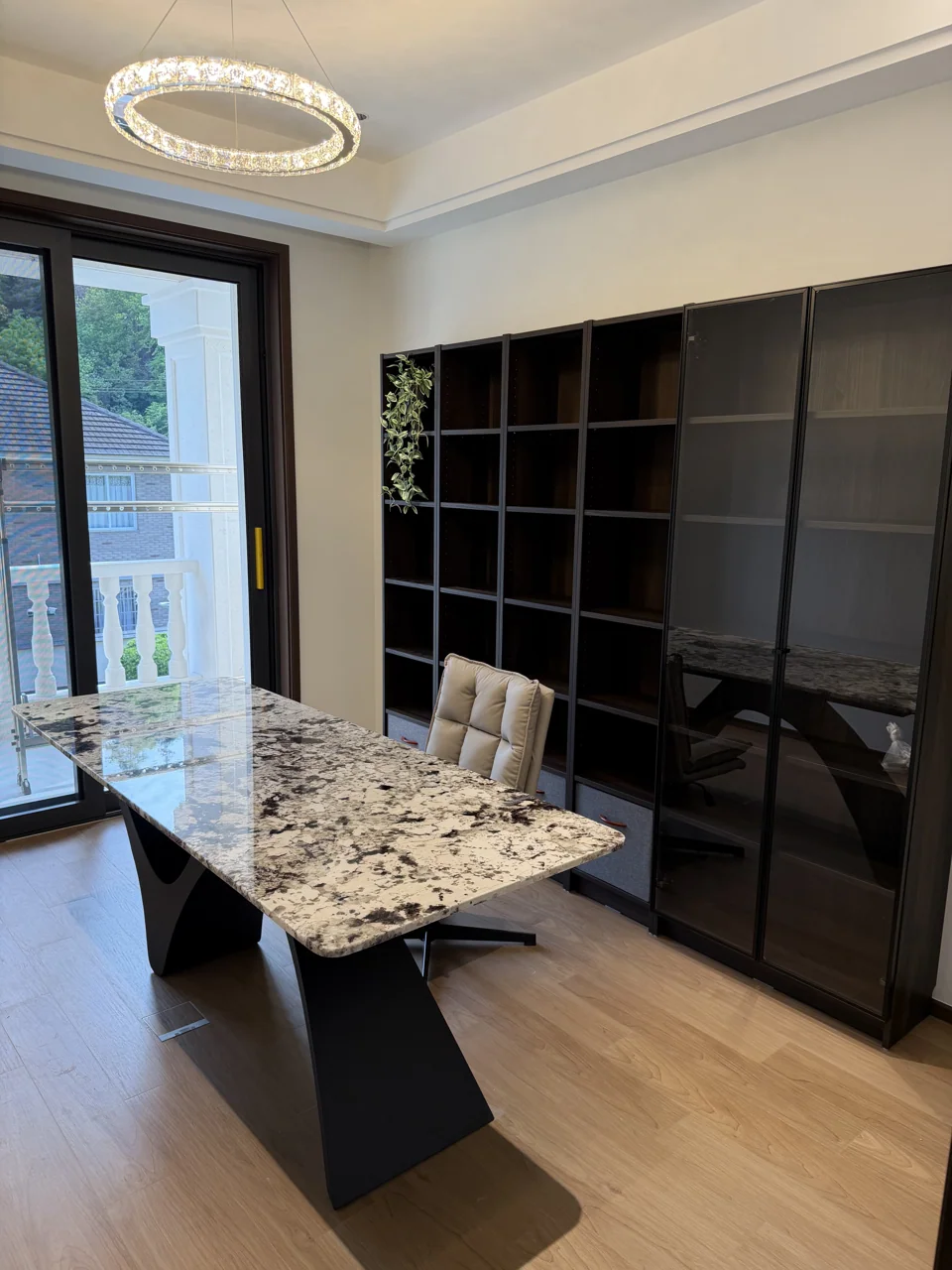
Planning a custom stone desk or worktable
Plan a stone desk around the chair, equipment and working position. Resolve cables and support before choosing the final edge and top dimensions.
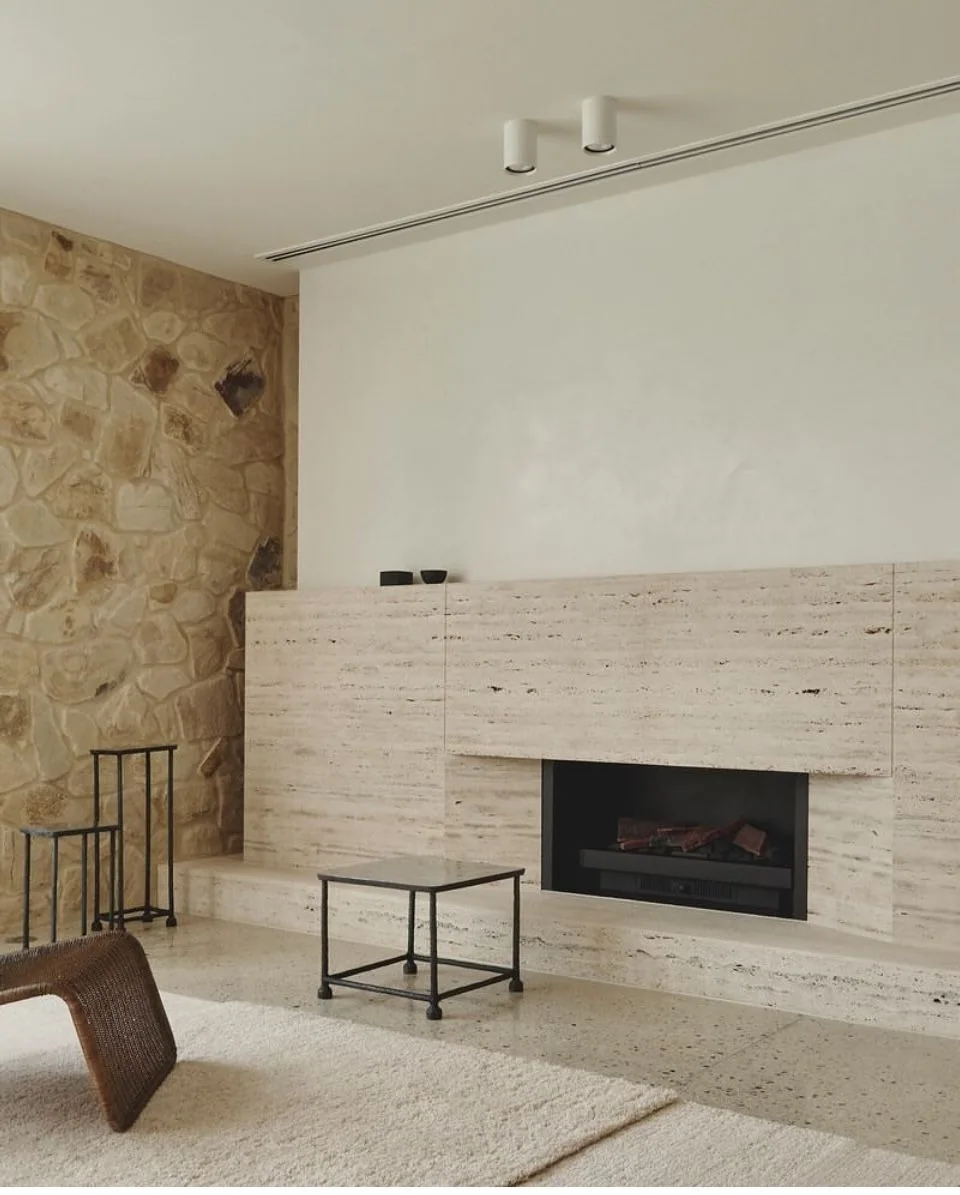
Planning a stone fireplace surround
Coordinate the stone surround with the actual fireplace or appliance. Its instructions and the site design come before the final stone drawing.

Choosing a stone dining table shape and base
Choose the shape and base with the chairs in place. The useful seating area depends on the support as well as the outline of the top.

An integrated stone basin: questions before fabrication
Freeze the tap, waste and access requirements before fabrication. The basin shape and the fittings need to be drawn as one assembly.
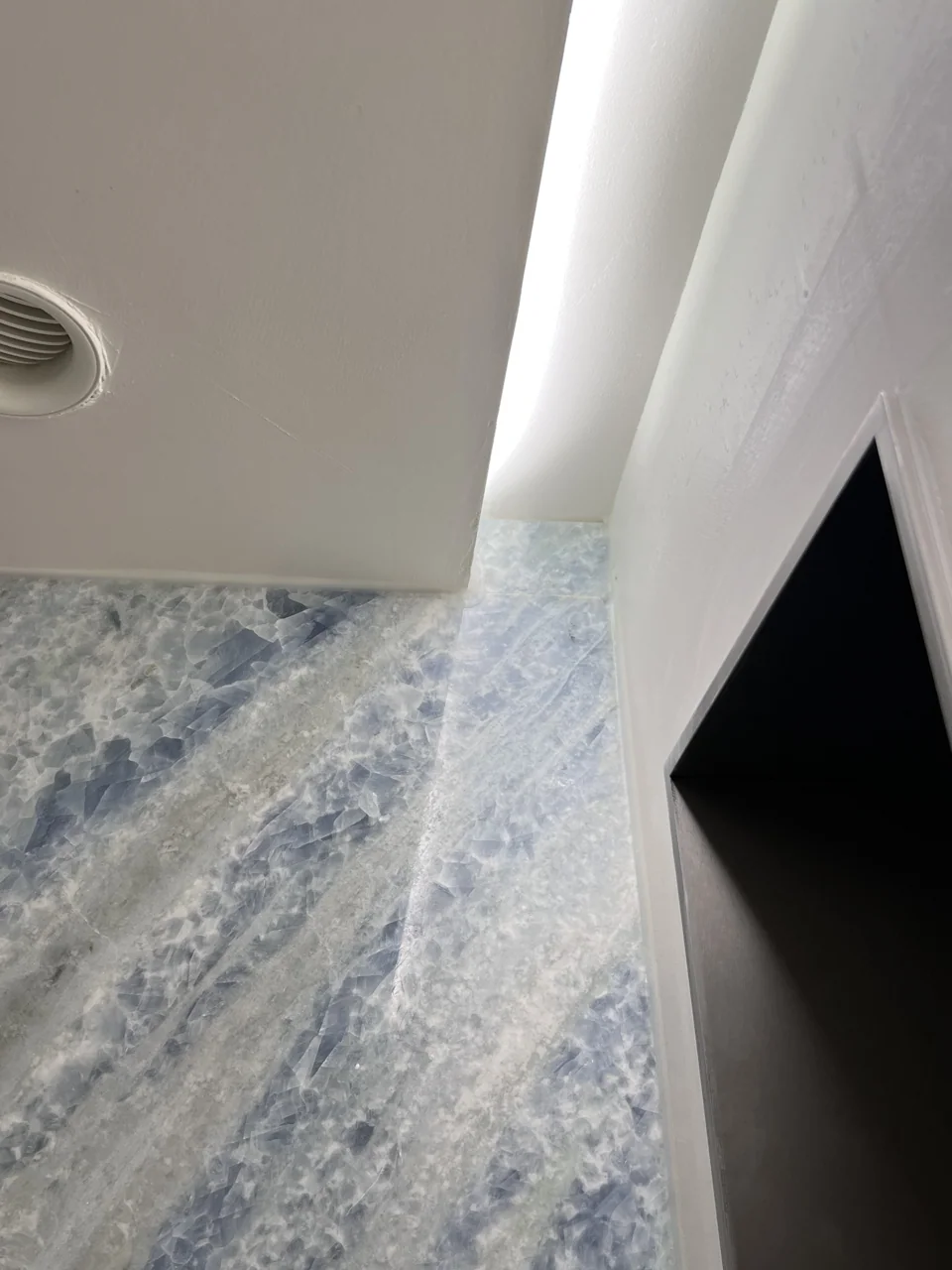
Bookmatch, vein-match and slab layout explained
Describe the pattern you want and approve its layout. Bookmatching, a continuous-looking vein and a deliberately quiet joint need different arrangements.
- Stone shower niches: coordinate the opening, lining and storage · Oct 31
- Stone bath planning: construction, services and everyday use · Nov 5
- Stone staircase planning: treads, edges and the full flight · Nov 10
Bring a reference. We will help clarify the brief.
Image sources
Image sources
Images illustrate design and material choices. They are not a record of an AxoStone installation.
- Image 1: Original source
- Image 2: Original source
- Image 3: Original source
Linked card image sources
Linked cards use illustrative photographs for the destination pages. They are separate from the numbered images above and are not a record of an AxoStone installation.
- Backlit stone: what to decide before ordering: Original source
- Planning a custom stone desk or worktable: Original source
- Planning a stone fireplace surround: Original source
- Choosing a stone dining table shape and base: Original source
- An integrated stone basin: questions before fabrication: Original source
- Bookmatch, vein-match and slab layout explained: Original source