
AxoStone · Material & project guide
Taj Mahal quartzite: material identity, slab selection and approval
Natural Taj Mahal is sold as a Brazilian quartzite, usually in cream, beige and taupe tones. Confirm that the quotation identifies natural quartzite, because similar names can appear on engineered products. Approve the actual slab photographs, finish, disclosed treatments and layout; a trade name and a small colour sample do not describe an entire slab.
What material are you specifying?
Natural Taj Mahal is sold as Brazilian quartzite, generally in beige, ivory and taupe tones. MSI lists several finishes and thicknesses for its own range; those listings describe that supplier's products, rather than stock held by AxoStone. Confirm the available batch and finish for your enquiry. See MSI's material description.
Keep the phrase natural quartzite on the quotation. Similar names also appear on engineered quartz products. The Natural Stone Institute's education site explains why a familiar name is not enough to identify a material. Read the naming guidance.
Natural quartzite and engineered quartz: what to verify
| Question | Natural quartzite | Engineered quartz surface |
|---|---|---|
| What is it? | A naturally formed stone, cut into slabs; an offered slab may still have a disclosed treatment or backing. | A manufactured surface combining mineral aggregate with a binder and other ingredients; the composition depends on the product. |
| What should the quote identify? | The supplier's material description, offered slab or lot ID, finish, disclosed treatment and supporting origin information where available. | The manufacturer, product name and specification, batch where available, finish and manufacturer guidance. |
| What about the intended use? | Confirm suitability and any relevant evidence for the actual stone, finish and project. | Check the selected product's instructions and specifications for the intended use. |
A shared trade name or similar appearance does not make the two materials equivalent. Compare the actual offer and keep any unverified identity or origin as an open question.
Honed, polished or leathered Taj Mahal: what should I compare?
On the actual offered quartzite, a polished sample generally reflects more light, a honed sample has a lower sheen, and a leathered finish has a tactile texture whose depth depends on the stone and process. View labelled samples of the same offered material side by side under the intended lighting; ask about edge treatment, cleaning access and care for the actual finish. Appearance does not prove stain resistance or another performance claim. See the finish selection guide.
How should I choose a backsplash?
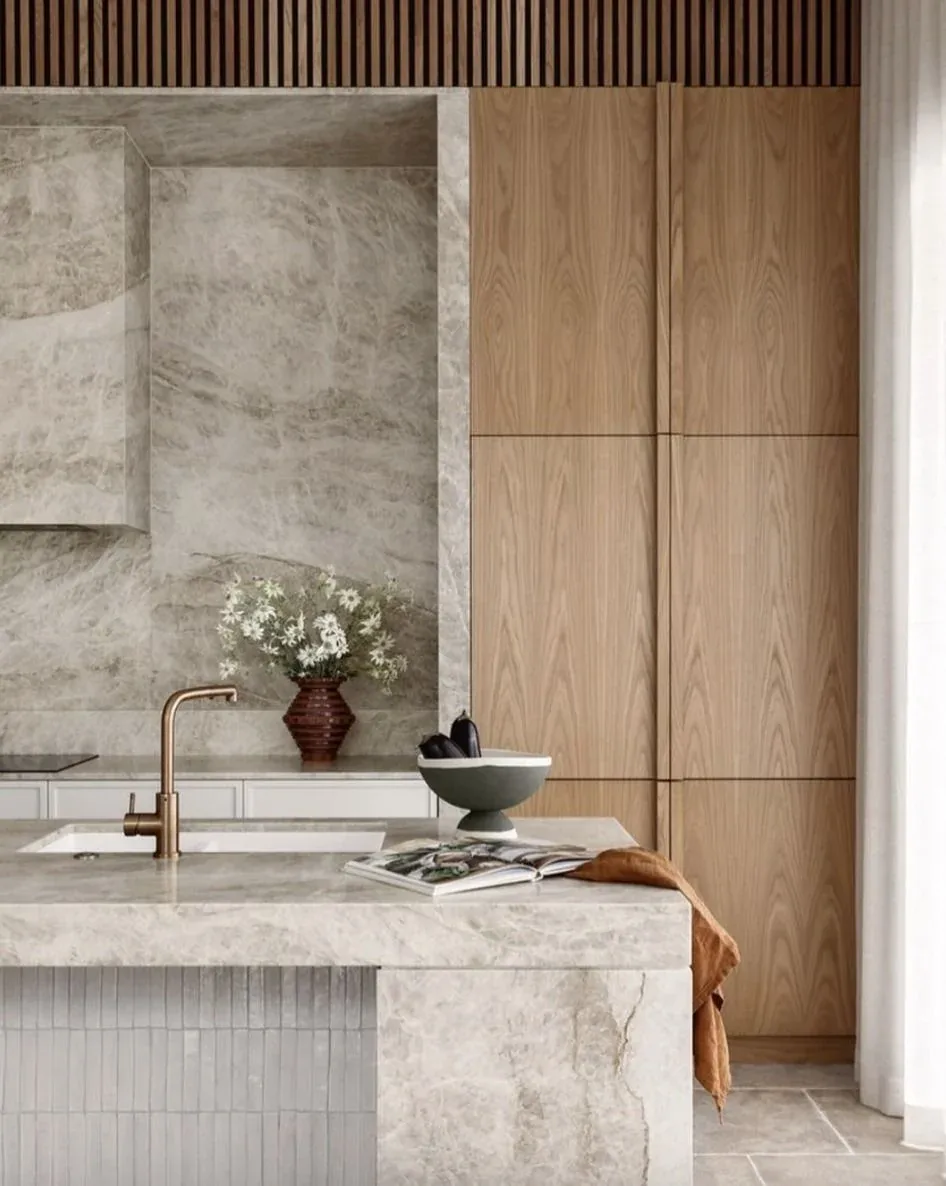
Place the proposed backsplash and cabinet samples beside the actual stone sample and inspect them in daylight and the intended room lighting. Decide whether the backsplash should continue the slab's pattern or provide a quieter contrast, then mark the joint, outlet, edge and return positions on the layout. A small sample is not a substitute for approval of the full slab and cut arrangement. Use the slab approval checklist.
Build the palette around a real sample
Place the proposed finish beside the cabinet, flooring and metal samples. Review the group in daylight and under the actual room lighting. A creamy stone can look warmer beside a cool white cabinet; a polished surface also reflects more of its surroundings. Photograph the complete sample set without a colour filter, then keep one approved physical sample as the comparison point.
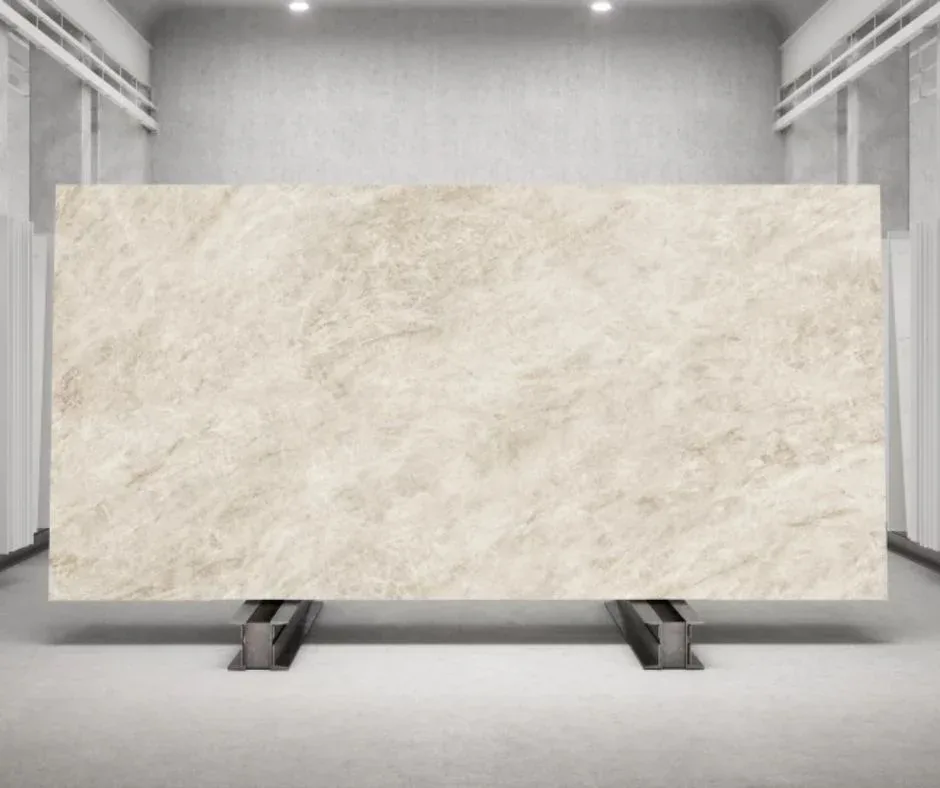
Ask for a perpendicular photograph of every proposed slab, including its identification label and usable dimensions. Mark the island, backsplash, table top or vertical return on those photographs. A narrow offcut can be useful for colour and finish review, but it will not show the full pattern distribution or the relationship between adjacent pieces.
Choose a detail that suits the application
| Application | Resolve before cutting | Useful approval evidence |
|---|---|---|
| Kitchen island or worktop | Sink, tap and appliance cut-outs; supports; seams; exposed edge | Dimensioned plan and section with the actual slab layout |
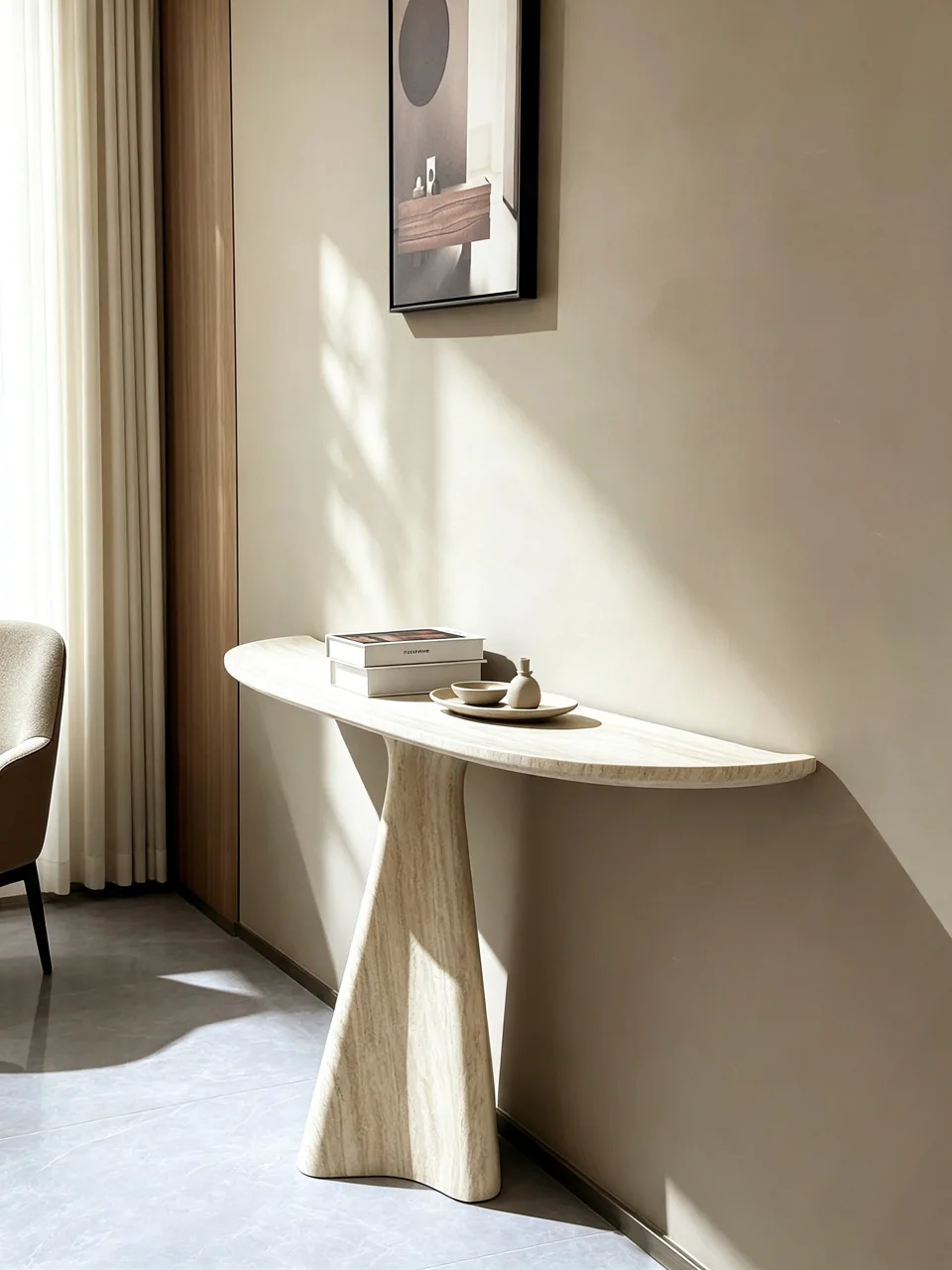
| Dining or console table | Base attachment, stability, seating clearance and delivery access | Assembled dimensions, underside detail and handling plan |
| Vanity | Bowl geometry, drainage, fittings and access beneath the basin | Fixture templates and a coordinated plumbing section |
| Wall or vertical return | Panel size, corners, visible seams and substrate requirements | Elevation, fixing design and junction mock-up |
An apparently thick edge may be solid stone, laminated layers or a mitred apron. State the actual top thickness separately from the visible edge depth. Use our solid versus built-up guide and cut-out checklist to make the drawing unambiguous.
Performance: ask about the supplied stone
Quartzite is a hard, quartz-rich natural stone, but products sold under the category can be misidentified. The geological explanation and sample tests in the Natural Stone Institute's quartzite guide help explain what to check. Have the supplier identify the actual stone and any resin, filling or backing treatment; do not infer a numerical absorption value or a warranty from a social-media caption.
Porosity varies within the quartzite family. A supplier's proposed sealing system should address the finished surface and worked edges. This quartzite comparison illustrates why material-specific assessment matters. Use chopping boards and trivets, wipe spills promptly and follow the fabricator's care instructions. These habits protect the finished assembly, including its seams and treatments.
Send a complete enquiry
- Application, destination and intended installation date.
- Overall dimensions, actual slab thickness and visible edge depth.
- Preferred tone and finish, with a labelled reference image.
- Required fittings, cut-outs, returns, seams and supports.
- Slab-selection expectations, sample requirements and delivery access.
Request a project quotation separating material, fabrication, supporting components, packing and delivery. A per-square-metre slab price from another market does not describe the cost of a finished piece.
Keep the offered slab and approval together
Use one record for the quotation, sample, slab photographs and layout revision. Record usable dimensions and which image shows which face. Ask the supplier to identify any resin, filling or backing. Only label a material or layout approved after the appropriate reviewer has agreed the actual proposal.
Keep the decision with the evidence: use the AxoStone material and sample approval records.
Visual references
Reference projects and products belong to their credited designers and makers. AxoStone confirms stone supply for the pictured kitchen island element. Original designs and image publications remain credited; the reference slab image is not a current stock listing.