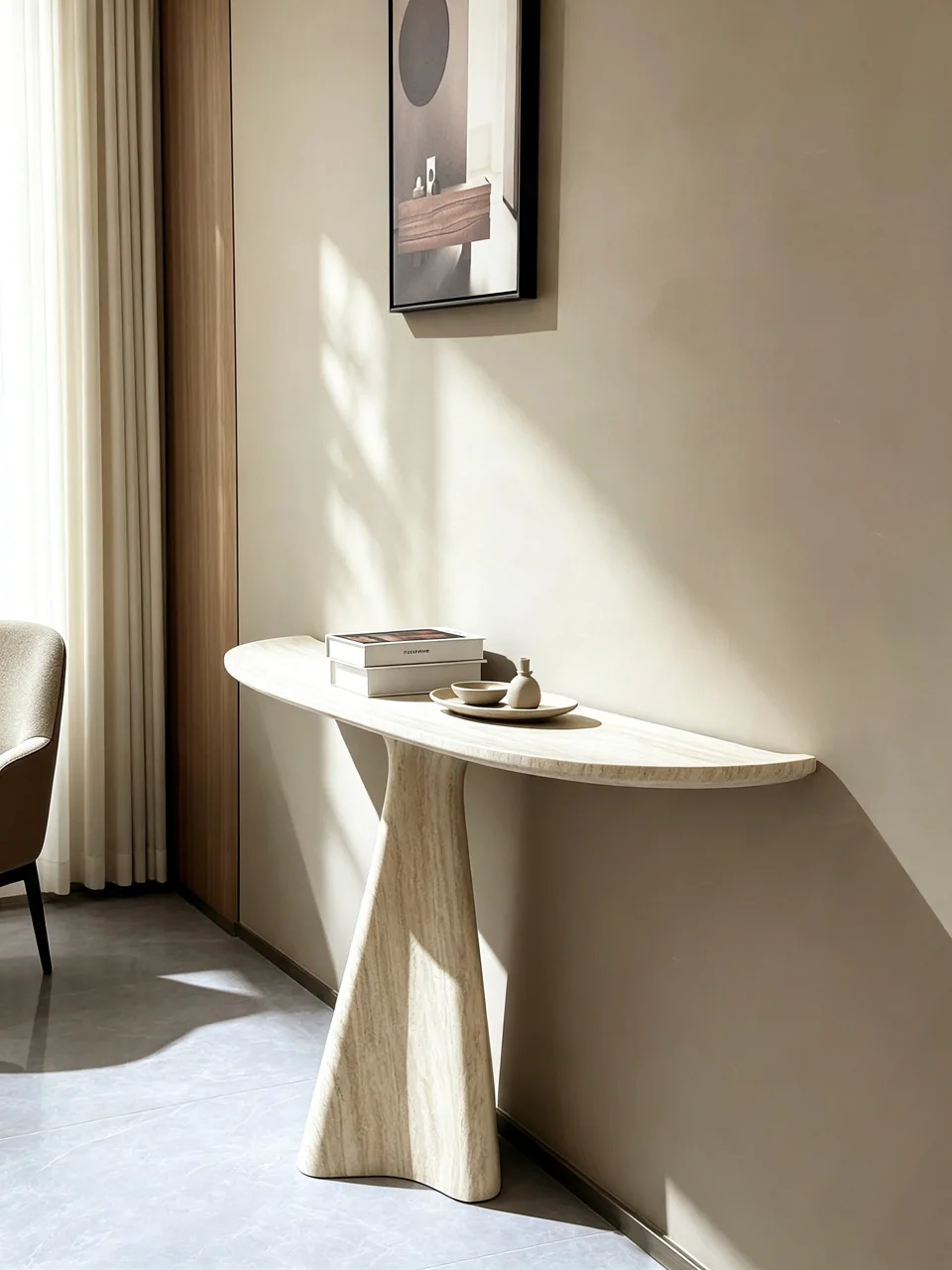

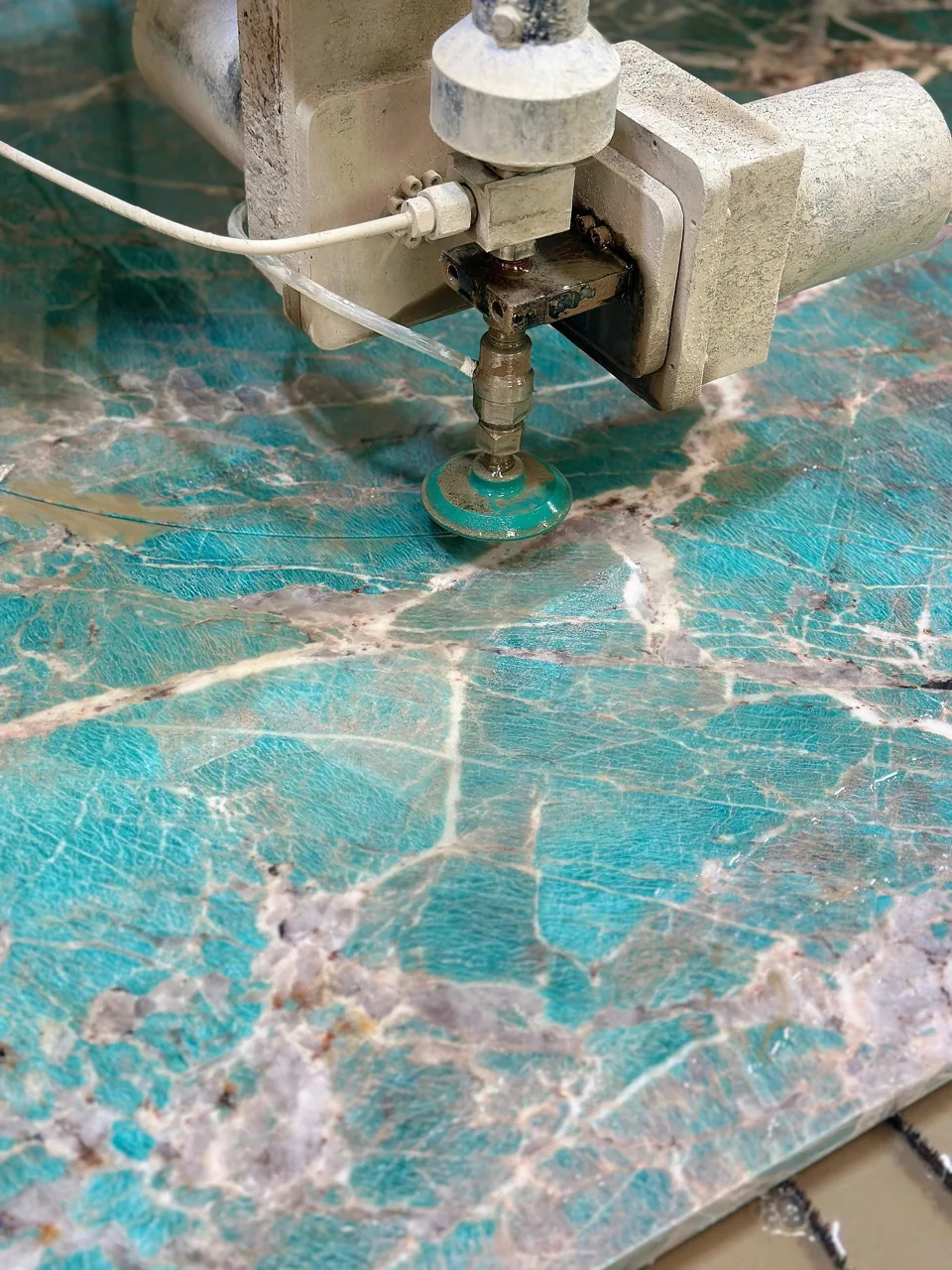
AxoStone · Material & project guide
Stone material and sample approval records
Keep the material name, physical sample, photographs, drawing and approval in one traceable record. Use these blank templates to state what is known, what remains unconfirmed and who approved each decision.
Choose the record for your decision
| Record | Use it to keep together | Download |
|---|---|---|
| Material verification | Names, sample or slab ID, documents, treatments and evidence status | Blank material CSV |
| Edge sample | Actual thickness, visible depth, joints, corners and measurement method | Blank edge CSV |
| Finish sample | Exact stone, process, pattern, lighting, scale and performance evidence | Blank finish CSV |
| Slab layout | Slab photographs, cut-out templates, seam locations and revision approval | Blank layout CSV |
| Project evidence | Actual role, constraint, decision, inspection, result and publication permission | Blank project CSV |
These are original blank AxoStone working templates. A blank record is not an approved sample, test report or completed project. Fill it with the actual proposal and supporting evidence.
Use a clear evidence status
| Status | What it means |
|---|---|
| Reference only | A name, photograph or design direction is being discussed; identity and performance remain unverified |
| Supplier confirmed | A named supplier has provided a statement or document; record its issuer, date and scope |
| Sample approved | The identified physical sample and stated features have been reviewed by the relevant approver |
| Layout approved | The identified slab and drawing revision have been approved for the agreed scope |
These statuses describe different decisions. Sample approval does not establish structural performance or replace project drawings. Keep unresolved questions visible.
Make photographs traceable
- Place the sample or slab ID beside the material; keep a scale in dimensional photographs.
- Record finish, lighting and viewing direction. Avoid colour filters.
- Capture the full piece and close-ups of edges, joints, corners and disclosed treatments.
- Link the files to the record and drawing revision, preserving original files.
- Record who made each measurement and how. A photograph alone cannot prove a performance claim.
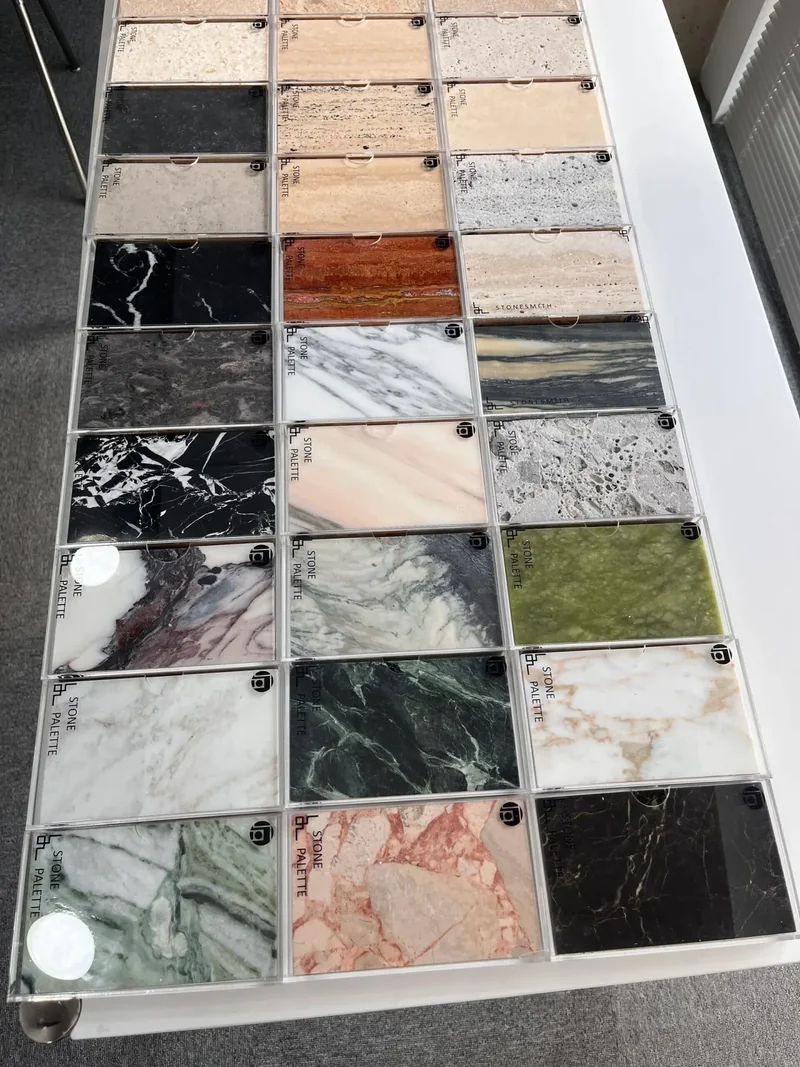
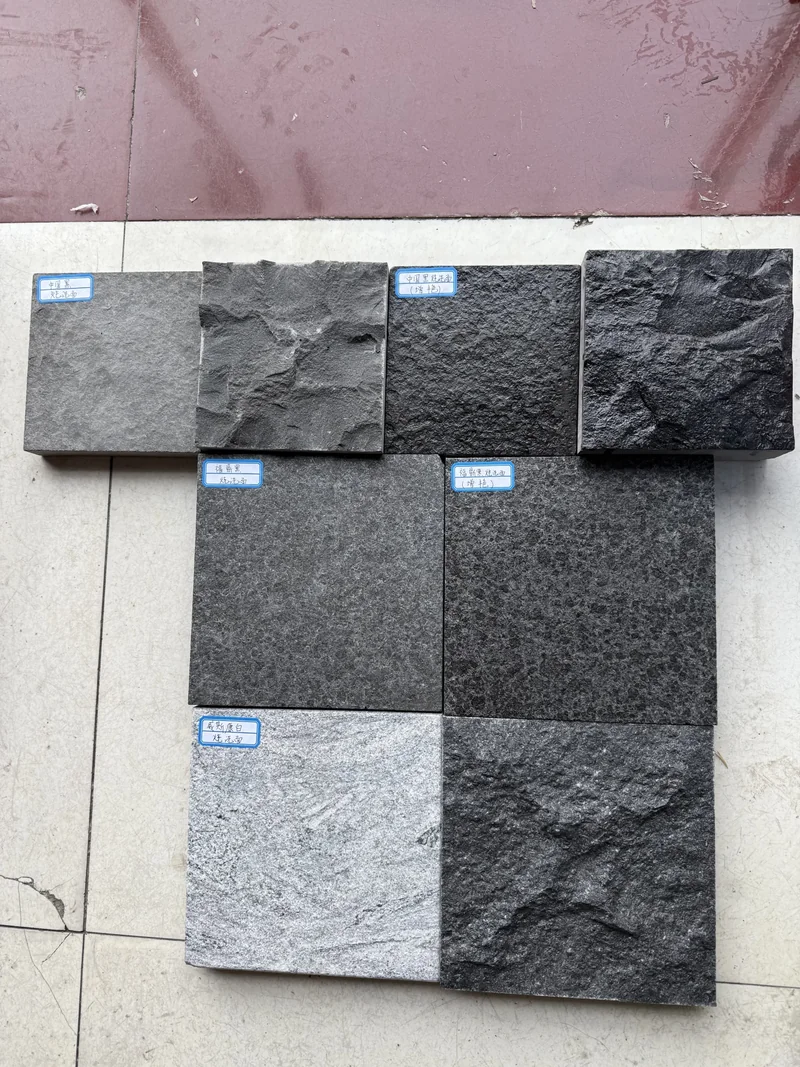
Reference photographs show two ways to organise the visual record: a labelled sample collection and a comparison of surface textures. Link your own sample photographs to the corresponding approval record.
Agree the record before cutting
Use one revision reference across the quotation, sample, photographs and drawing. State the actual material, dimensions, visible details, supports, fittings and delivery responsibilities. Record changes explicitly rather than silently replacing a file.
For a project enquiry, send the relevant completed record with your brief through Start your project. Keep private customer, payment and site-access information out of any public example.
What makes a useful project example
A useful case explains the actual role of each party, the design constraint, the chosen detail, the evidence used and the result observed. Include only real measurements and photographs, with permission for the stated publication scope. A reference design or generated scene should remain labelled as such.
Technical results should state the material, method, units, conditions and limitations. Name a reviewer only when that person actually performed the stated review.